

Looking for mind map examples you can actually use for work?
This guide shares practical mind map and concept map examples for brainstorming, project planning, content mapping, meeting notes, strategy-building and process design, so you can see how mind mapping works in real business scenarios, not just theory.
And if you want to build one fast, Venngage’s Mind Map Maker offers customizable mind map templates, an easy drag-and-drop editor and accessibility tools, so your team can turn ideas into clear visuals in minutes with no design skills needed.
Simple mind map examples
Mind maps usually start with one main idea in the center and branch outward to explore related thoughts. But simple mind maps prove that you don’t need a complex layout to clarify ideas.
In fact, a minimalist mind map often makes it easier to spot patterns, group information and stay focused.

Simple mind map examples, like the one below, illustrate the point that mind maps don’t have to be overly complex to be helpful and effective methods for organizing a process or developing a business strategy.
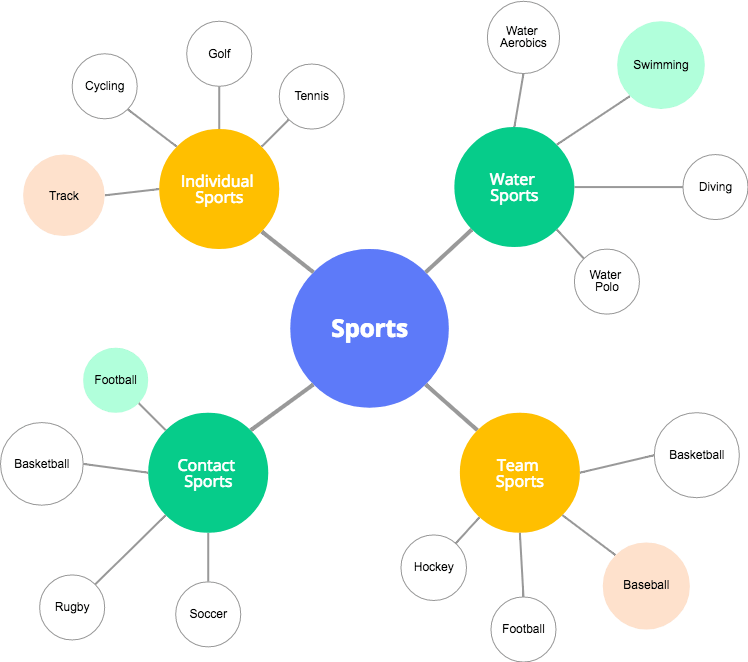
Best for: Quick brainstorming, organizing thoughts, basic planning and note-taking
Why this works: A simple structure reduces visual clutter, making it easier to follow connections and process information at a glance. You see the big picture without getting distracted by unnecessary detail.
Business plan mind map examples
Business planning works especially well with mind maps because you can see strategy, tasks and gaps in one view. From launching a new product to refining internal processes, these examples show how mind maps make planning more visual and actionable.
This business plan mind map example is focused on a marketing communications plan. The simple approach helps the reader understand the variety of channels and outreach methods in question, and they can see at a glance what areas still need to be ironed out.

Best for: Marketing strategy planning, campaign mapping and channel management
Why this works: The clean layout makes it easy to compare channels, spot missing touchpoints and understand how each tactic supports the overall plan at a glance.
Don’t be afraid to think differently with your mind map. This mind map example for business illustrates how breaking the form slightly can create a more interesting visual. In this case, the sections and content are arranged in a semi-circle. The result is a more approachable diagram.

Best for: Presentations, team workshops and high-level planning sessions
Why this works: The semi-circle layout breaks away from the usual structure, making the diagram feel more open and less overwhelming. It draws attention naturally and encourages exploration without cognitive overload.
Remember how we said not all mind maps start in the center? This business plan mind map example is another good illustration of an alternate mind map arrangement. In this case, the result is an excellent blend of basic outline and true mind map.

Best for: Structured planning, large projects and detail-heavy strategies
Why this works: The linear layout makes information easy to scan while still showing relationships between ideas. It’s ideal when you want clarity without losing the flexibility of a mind map.
Brainstorming mind map examples
One of the best parts about making a mind map is that the very creation of it can spark new ideas. That’s why they’re excellent tools for brainstorming, whether it’s coming up with a new product idea or just generating a topic for a blog post.
This brainstorming mind map example uses content marketing as the main theme, but the layout works just as well for product ideas, campaign planning or concept exploration.

Best for: Idea generation, creative sessions and early-stage planning
Why this works: Multiple branches encourage divergent thinking, making it easier to explore ideas without filtering too early. Connections appear naturally as the map fills out.
Brainstorming mind maps are helpful for many types of uses, including organizing thoughts around a central topic.
This video from the University of Michigan-Flint describes the creation of a mind map that focuses on the positives and negatives of vegetarianism, but trainers and managers could use a live brainstorming mind map session to explain new concepts or explore team feedback.
You can skip to 6:40 to see the complete mind map:
Time management mind map examples
Making sure time is being used efficiently is a key concern for any company. That’s because wasted time counts directly against your bottom line. Help teams and individual staffers organize and better manage their time by creating mind maps. For even deeper oversight, businesses can pair these visual plans with a dedicated time tracking solution to accurately monitor project hours and improve overall operational transparency.

Best for: Personal productivity, workload planning and team routines
Why this works: Seeing all tasks and responsibilities in one view helps reduce overwhelm and keeps priorities clear throughout the day.
On the other hand, this time management mind map is an excellent way for individuals and entire teams to review the important aspects of time management so they can be sure their workday is spent efficiently.

This example by Time Management Ninja is focused on a theoretical family trip, but it would also be an effective way to manage time and planning involved in any big business event.
Best for: Time estimation, planning exercises and training sessions
Why this works: A real-world scenario makes time constraints easier to understand. Teams can quickly see where delays happen and which activities need tighter planning.
Research mind map examples
When they’re used to guide research projects, mind maps are often called concept maps. Whatever vocabulary you used to describe it, creating a mind map to kick off any major research project is a great way to ensure the project is well-organized.
This example maps the key areas nonprofits evaluate when measuring impact, making it easier to see how different data points connect.

Best for: Research planning, evaluation frameworks and impact reporting
Why this works: Breaking research into visual sections helps you understand the scope upfront and prevents important areas from being overlooked.
Organizing complex concepts is difficult. But this research mind map example illustrates how creating the visual structure of a mind map can focus thinking and effort.
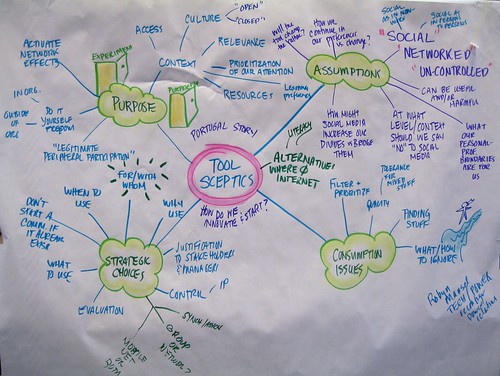
Best for: Academic research, strategic reports and technical topics
Why this works: A clear visual hierarchy keeps complex ideas from feeling overwhelming and helps turn scattered notes into a focused research direction.
Creating a mind map like this for your organization’s research efforts can help ensure any publishing you do as a result is clear and focused. If your research starts with physical documents, printed reports, or handwritten notes, this guide on best free OCR software by G2 outlines tools that can quickly convert them into editable text, making it easier to organize and integrate into your mind maps.
Mind map examples by tool: A comparison
Different mind mapping tools create very different-looking maps. Below is a quick comparison of popular platforms and the kind of mind maps they produce.
MindMeister examples
MindMeister is a paid tool solely for creating mind maps. Little customization is possible, but you can create some impressive mind maps using the tool.

Many MindMeister maps grow massive and detailed. While visually impressive, they can become hard to scan if too much information appears in one view.

MindNode examples
MindNode is another paid tool focused on sleek, modern design. Like MindMeister, it favors simplicity, but with a more polished, contemporary feel.
Users often rely on MindNode for creative planning, such as mapping out game plots or trip itineraries. It’s especially popular for personal organization and visual thinkers who prefer a cleaner interface.
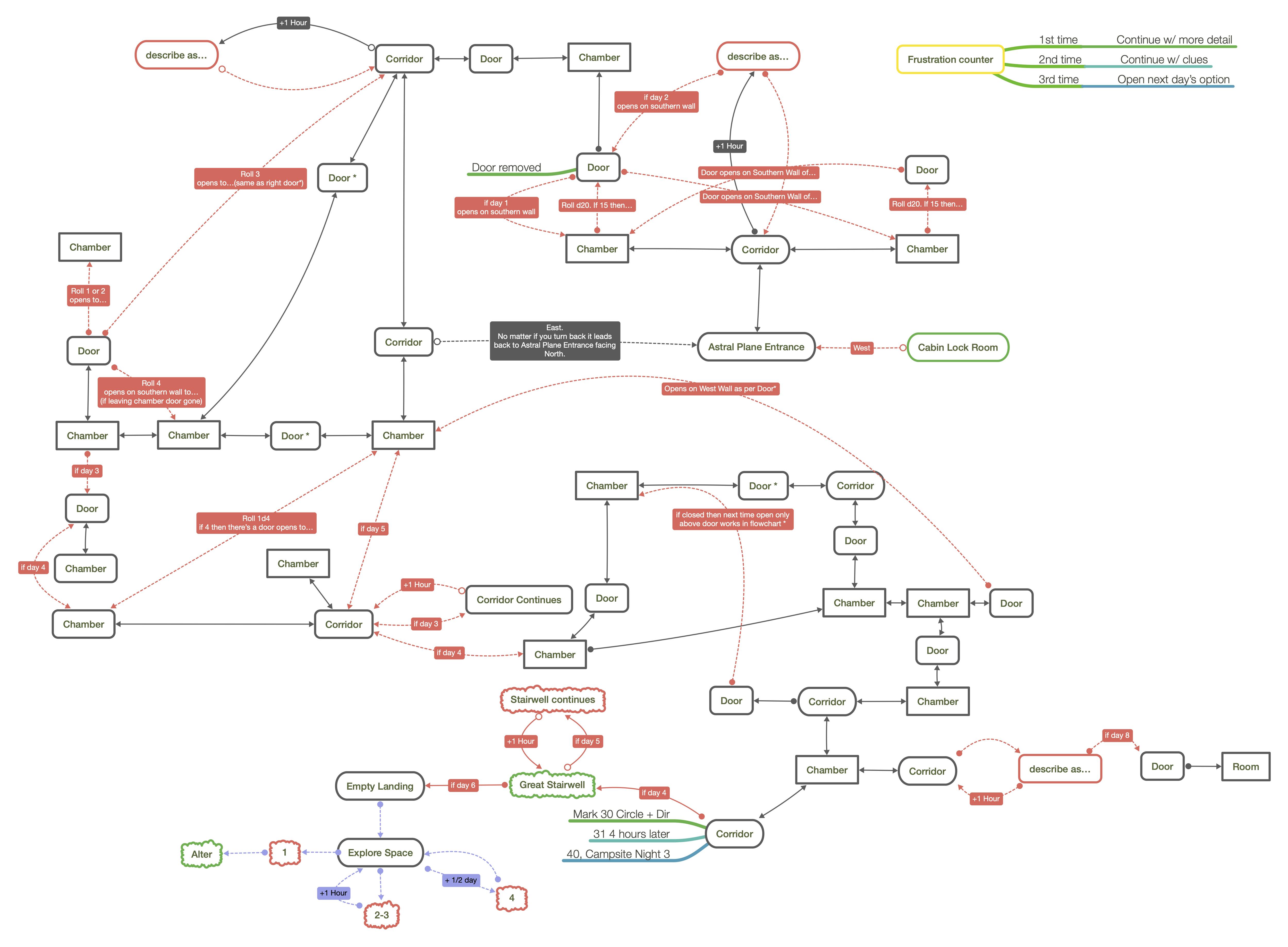
This MindNode example comes from user Christopher, who creates mind maps for playing games of Dungeons & Dragons with his friends. Creating a mind map is an ideal way of planning the game for maximum fun and challenge.
MindNode user David relies on mind maps for his work as an app developer, and he’s begun incorporating them into his personal life. This MindNode example helped David plan a recent road trip in France.

FreeMind examples
FreeMind is a free, open-source tool known for its functional, no-frills style. It’s widely used by developers, researchers
Writers also use FreeMind to organize complex projects like novels or screenplays. Because it runs on Java, compatibility can be an issue for some users and browsers.and technical users who value speed and structure over design.
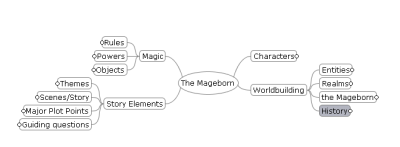
MindMeister v.s MindNode v.s FreeMind pros and cons
Different mind mapping tools create very different-looking maps. Below is a quick breakdown of what you can expect from popular platforms and who they’re best for.
| Tool | Pros | Cons |
|---|---|---|
| MindMeister |
|
|
| MindNode |
|
|
| FreeMind |
|
|
Tony Buzan mind map examples
Tony Buzan was a British educational consultant who popularized a method of mind mapping that remains popular today.
A Google search of the term brings up many examples of mind map diagrams in the Buzan style. Buzan mind maps are characterized by organic lines, colors and a hand-drawn look.
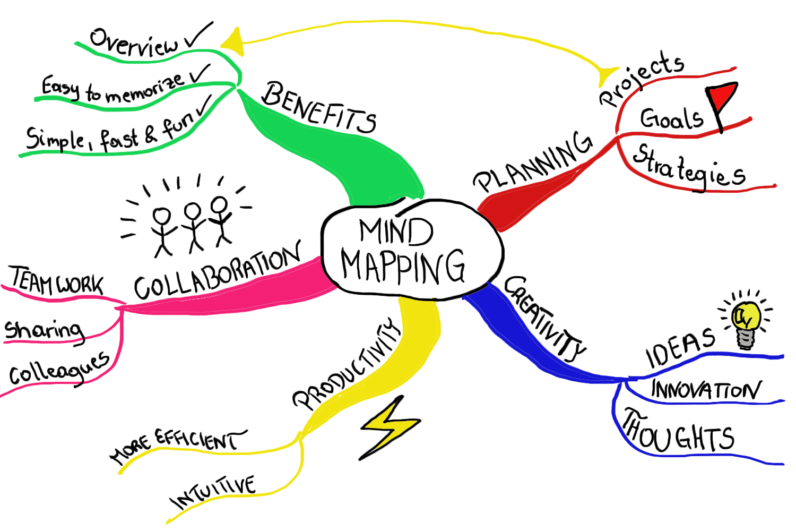
Image Source: MindMeister
The man himself is the subject of this Tony Buzan mind map example. Buzan’s image is in the center, while his trademark curved lines help organize the branches of a mind map on his life. Buzan passed away in 2019, but his style of mind mapping is an industry unto itself.
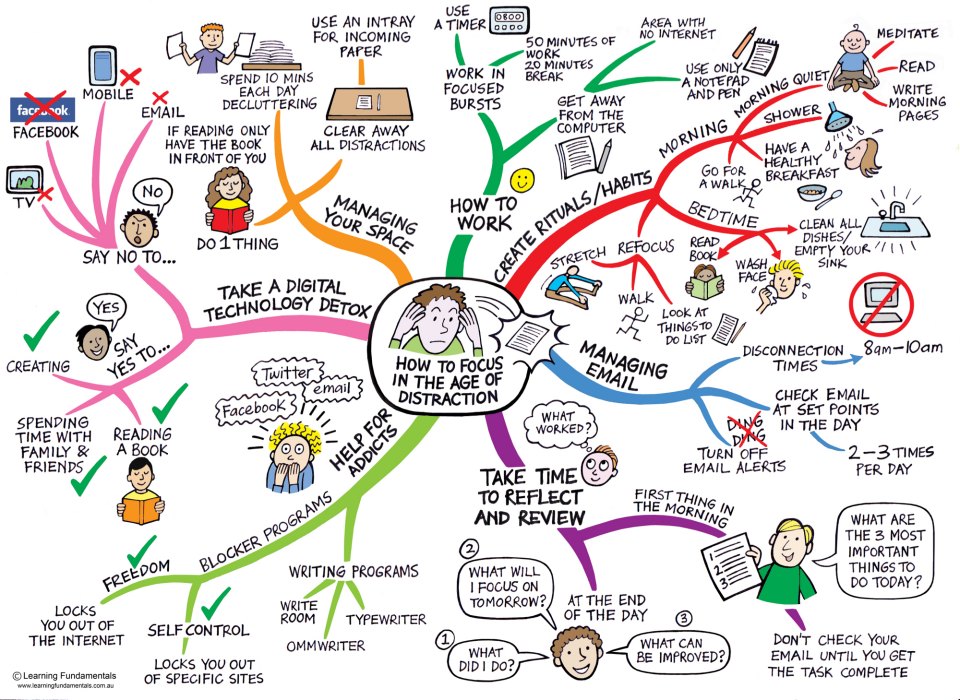
This Tony Buzan mind map example perfectly illustrates the approach he pioneered. A central idea is surrounded by branches of thought leading to actionable insights. This idea map example drives home the need to eliminate distractions.
How to use Mind Map Maker
Making mind maps using Venngage’s intuitive Mind Map Maker is incredibly easy. Access free mind map templates and customizable concept maps, bubble maps and process maps to bring your communications and planning to life.

When using a Business account with Venngage’s Mind Map Maker, anyone on the team will have access to seamless real-time collaboration, helping you streamline the approval process:

You can also make sure that every mind map you create is professional and on-brand by applying your brand colors, logo and fonts in one click with My Brand Kit:

Most of our templates are created with the simple drag-and-drop editor that lets you design in minutes, even if you have no design skills.
We’re also rolling out new smart templates with the smart mind map editor which makes it easy for you to create new branches, move mind map nodes around, add or delete text, icons or illustrations in minutes:

Easily arrange the nodes around the circumference of the mind map by clicking the ‘Tidy’ function in the top menu. Our Smart editor does all the work for you!

When you’re done, you can share a private link for your team members or download your mind map as a high-quality PNG, PDF, Interactive PDF or PowerPoint file that can be used for presentation:

Mind map FAQ
Do you have questions about mind maps? We have the answers.
1. What are the three main components of a mind map?
There are many ways to put together a mind map, but they all have at least these three elements: a central idea, topics that branch out from the central idea and subtopics that provide details about main topics.
2. How do you explain mind mapping?
Mind mapping is a visual and organizational method of arranging concepts and ideas. The result is a mind map diagram that allows a reader to understand a variety of aspects of one central idea or topic.
3. How do businesses use mind maps?
Mind maps can be used in a business context for brainstorming new product ideas, organizing teams, presenting in-depth research, managing major projects or collaborating across departments.
4. How to choose best mind mapping software?
When choosing the best mind mapping software, consider factors such as ease of use, customization options, and the ability to collaborate in real-time with others. Also, compare features like export formats and integration with other productivity tools to ensure the software meets your specific needs.
In summary: Mind maps give you a way to let your team visualize your thought process and facilitate team collaboration
For any business, organizing complex ideas is a difficult task. It’s even harder to communicate those complex ideas in an efficient way, either in person or remotely. But mind maps help solve that problem.
Until humans evolve the ability to think telepathically, a mind map may be the only way to give your audience a glimpse into your brain. Creating effective and engaging mind maps can help organizations with planning, execution, employee development and many other areas.
You can start creating your own mind map for free with Venngage, no design experience required.