

Writing a research proposal can feel like one of those tasks that’s somehow both exciting and painfully intimidating. You have the ideas, the research interests and maybe even a rough direction, but turning all of that into a structured proposal is where many people get stuck. That’s where ChatGPT can actually help.
In this guide, I’ll walk you through how I use ChatGPT to write a research proposal step by step, from brainstorming the topic to organizing your methodology and refining your writing. The goal isn’t to outsource your thinking or let AI do the research for you. It’s to make the drafting process faster, less stressful and a lot easier to organize while still keeping your ideas and academic voice intact.
One important thing before we start: ChatGPT is great for writing support and structure, but it’s not a reliable source of truth. It can make up citations, misunderstand research context or confidently give inaccurate information, so you’ll still need to fact-check everything and verify your sources carefully.
Can you use ChatGPT to write a research proposal? (what’s allowed + what’s not)
Short answer: Yes. In many cases, you can use ChatGPT to help write a research proposal. But the important part is how you use it.
Most universities, supervisors, funding bodies and journals are starting to accept AI-assisted writing tools in some form, especially for drafting and editing.
The tricky part is that every school seems to have its own opinion about AI right now. Some programs are totally okay with using ChatGPT for brainstorming or editing, while others want you to disclose it, and a few don’t allow it much at all.
So before you excitedly paste your entire draft into ChatGPT at 1 a.m. (we’ve all been there), take two minutes to check your program’s official policy first.
A good rule of thumb: using ChatGPT as a writing assistant is usually acceptable. Using it to replace your research thinking is where things get risky.
The “safe zone” for using ChatGPT
These are the kinds of tasks ChatGPT is commonly used for in research proposal writing:
- Brainstorming research topics or narrowing a broad idea
- Creating an outline for your proposal sections
- Rewriting sentences for clarity or flow
- Summarizing your own notes or articles you’ve already read
- Generating sample interview or survey questions
- Helping format headings and structure sections
- Explaining complex concepts in simpler language
- Checking tone, grammar or readability
Basically, ChatGPT works best as a productivity and organization tool, not as a substitute researcher.
The risky side of using ChatGPT
There are also some uses that can seriously cross ethical or academic lines:
- Generating fake research findings or data
- Inventing citations, references or sources
- Misrepresenting AI-generated work as entirely your own thinking
- Uploading confidential, proprietary or participant-identifiable information
- Using AI-written content without reviewing or verifying it
One thing people learn very quickly: ChatGPT can sound extremely confident while being completely wrong. That’s why verification matters so much in academic writing.
Quick compliance checklist
Before submitting your proposal, run through this quick checklist:
- Check your university, supervisor or funder’s AI policy
- Keep copies of your drafts and prompts
- Disclose AI use if your institution requires it
- Verify every citation, claim and statistic manually
- Avoid pasting sensitive research or participant data into AI tools
- Make sure the final proposal genuinely reflects your own reasoning and decisions
The “30% rule”: a simple human-in-the-loop standard
One of the easiest ways to use ChatGPT responsibly is to follow what I call the “30% Rule.”
The idea is simple: AI helps with the prep and polish, while you stay responsible for the judgment and originality.
In other words, ChatGPT can help you move faster, organize messy thoughts and improve readability. But the core intellectual work — the actual research thinking — still needs to come from you.
Here’s a simple way to divide the work:
Tasks ChatGPT can help with
- Building proposal outlines
- Rewording awkward paragraphs
- Improving clarity and flow
- Suggesting alternate phrasings
- Turning bullet points into draft paragraphs
- Checking your proposal against a rubric
- Helping you organize literature themes
- Creating draft section headings
Tasks that need to stay human-led
- Identifying a meaningful research gap
- Making methodological decisions
- Defending why your study matters
- Assessing feasibility and limitations
- Making ethical research commitments
- Interpreting sources accurately
- Verifying citations and evidence
- Developing original arguments and insights
This distinction matters more than people think. Reviewers can usually tell when a proposal feels generic, over-polished or disconnected from real subject knowledge. Strong proposals sound thoughtful and specific because they reflect actual research judgment, not just smooth writing.
Using ChatGPT responsibly also protects your credibility. If your proposal includes fake citations, vague logic, or unsupported claims, it can quickly undermine reviewer trust.
But when AI is used carefully as a drafting and organization assistant rather than a replacement thinker, it can genuinely make the writing process more manageable without compromising academic integrity.
Before you prompt: the 7 core parts of a research proposal (plus common add-ons)
Before you start throwing prompts into ChatGPT, it helps to know what a research proposal is actually supposed to include. A lot of people jump straight into “Write my introduction” mode and then realize halfway through that they’re missing entire sections. (Again, speaking from experience.)
The exact structure depends on your university, program and even your department, but most research proposals include these seven core parts:
- Title: Nothing fancy, just something clear enough that people immediately understand your research focus.
- Introduction / Background + Problem Statement: This is where you explain the topic, why it matters and the specific problem your research is trying to address.
- Literature Review: Basically, what’s already been studied, what researchers are saying and what gap still needs more research.
- Research Questions, Aims or Hypotheses: The “what exactly are you trying to figure out here?” section.
- Methodology: This covers how you’re actually going to do the research — your design, participants or sample, data collection methods and analysis approach.
- Ethics, Limitations and Feasibility: Are there ethical concerns? Time constraints? Practical limitations? Can this study realistically be completed?
- References: The sources supporting your proposal and research direction.
Depending on your program or funding application, you might also need a few extra sections like:
- A timeline or project schedule
- Budget estimates
- Expected outcomes or impact statement
- Theoretical framework
- Dissemination or publication plan
A Master’s proposal is usually shorter and a bit more exploratory, while PhD and grant proposals tend to go much deeper into methodology, originality and research impact. The higher the stakes, the more detail people expect.
Also (and this is important) always follow your department’s rubric or proposal guidelines over whatever generic template you find online. You could have the most beautifully written proposal ever, but if it ignores your program’s required format, reviewers will notice immediately.
Step-by-step: Draft each proposal section with ChatGPT (copy/paste prompts)
This is the part where ChatGPT becomes genuinely useful. Instead of asking it to “write my research proposal” (which usually produces generic nonsense), you’ll get much better results by treating it like a collaborative writing assistant and working section by section.
The key is giving ChatGPT enough context upfront so it understands your academic level, goals and constraints before it starts generating anything.
Step 1: Give ChatGPT your rubric, constraints, and success criteria
This step makes a huge difference.
Most bad AI output happens because the prompt is too vague. ChatGPT can’t read your department rubric, your supervisor’s expectations or your assignment brief unless you actually give it that information.
Before you ask it to draft anything, provide:
- Your discipline or field
- Academic level (Bachelor’s, Master’s, PhD, grant proposal, etc.)
- Word count or page limit
- Required proposal headings
- Intended audience (supervisor, admissions committee, funder)
- Citation style
- Research approach (qualitative, quantitative, mixed methods)
- Any major constraints (time, access, budget, sample limitations)
Prompt template
“You are my research methods supervisor helping me develop a research proposal.
Here are my constraints:
- Discipline: [field]
- Academic level: [Master’s/PhD/etc.]
- Word count: [X]
- Required sections: [paste rubric/headings]
- Audience: [committee/supervisor/funder]
- Citation style: [APA/MLA/etc.]
- Constraints: [timeline/access/sample limitations]
Based on these requirements, create:
- A recommended proposal outline
- Key issues I need to think through
- Questions you need to ask me before drafting.”
What to expect from the output
A good response should:
- Suggest a realistic structure
- Identify missing information
- Ask clarifying questions
- Highlight feasibility concerns
- Reflect your actual academic level
If ChatGPT immediately starts writing full sections without asking for clarification, that’s usually a sign the prompt still needs more detail.
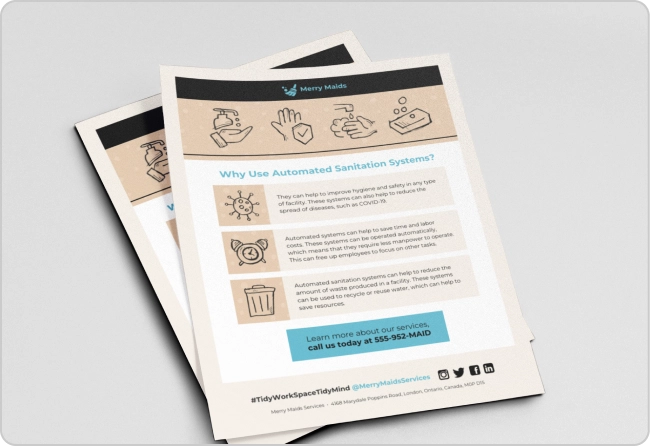
Once you’ve refined your research proposal with ChatGPT, using a professional template can make the final version feel far more polished and easier to follow.
This simple research proposal template is especially useful for organizing dense academic content into a cleaner, more readable layout.

Its structured sections help present research questions, methodology, timelines and literature review summaries more clearly, while the professional grey-and-red design keeps the proposal formal without looking overwhelming.
It’s also easy to customize for Master’s, PhD or grant proposals, making it a practical option for students who want their work to look organized and committee-ready without spending hours on formatting.
Step 2: Generate and narrow a feasible topic
This is where a lot of proposals either become manageable… or spiral into “I accidentally designed a five-year international study.”
A strong topic is usually:
- Specific
- Researchable
- Feasible within your timeline
- Relevant to your field
- Supported by accessible data or participants
One of the easiest ways to narrow a topic is to define:
- The variables or phenomenon
- The population
- The context or setting
- The timeframe
- Your level of access to data or participants
Prompt: Generate topic angles
“Generate 10 possible research proposal topics related to [broad area]. For each, include:
- Possible research gap
- Suggested methodology
- Target population
- Feasibility concerns
- Why the topic matters”
Then pick your top three and narrow further.
Prompt: Narrow to one focused topic
“Help me narrow these three topic ideas into one feasible research proposal topic for a [Master’s/PhD] study with a [timeline] timeframe.
Prioritize:
- realistic scope
- accessible data/participants
- strong research gap
- methodological feasibility”
Prompt: Feasibility risk assessment
“Create a feasibility risks and mitigation table for this proposed study. Include recruitment risks, ethical concerns, timeline risks, access limitations and data collection challenges.”
Honestly, this step alone can save people months of future stress.
Step 3: Write research questions, aims, and (optional) hypotheses
This section trips up a lot of people because these terms sound interchangeable, but they’re slightly different.
- Research aim: the overall purpose of the study
- Research questions (RQs): what specifically you want to investigate
- Hypotheses: testable predictions (usually for quantitative studies)
A good research question is clear, focused and realistically answerable within your project scope.
Prompt: Generate research question options
“Based on this research topic and gap, generate:
- one broad set of research questions
- one medium-scope set
- one narrowly focused set
Include methodological implications for each.”
Prompt: Convert RQs into SMART objectives
“Turn these research questions into SMART research objectives suitable for a research proposal: [paste RQs]”
Prompt: Critique your research questions
“Critique my research questions for:
- clarity
- scope
- measurability
- alignment with methodology
- feasibility
Identify any questions that are too broad, vague or difficult to answer.”
This is one of the most useful prompts in the entire workflow.
Step 4: Draft the introduction
Most strong proposal introductions follow the same basic flow:
- Introduce the broader topic
- Explain the problem
- Identify the research gap
- State your purpose
- Explain why the study matters
For research proposals specifically, future tense often appears when discussing planned research methods and expected contributions.
Prompt: Draft the introduction
“Draft a research proposal introduction using this structure:
- Background/context
- Problem statement
- Research gap
- Study purpose
- Significance
Topic: [insert topic]
Academic level: [level]
Keep the tone formal, specific and suitable for a research proposal.”
Prompt: Improve tone and specificity
“Rewrite this introduction in a more academically precise way. Remove vague language, overly dramatic claims and generic statements. Add specificity where needed.”
Prompt: Add significance
“Expand the significance section for:
- academic contribution
- practical implications
- policy/professional relevance
Audience: [committee/funder/practice field]”
One thing reviewers notice immediately: whether the introduction sounds genuinely research-driven or just broadly “interesting.” Specificity matters a lot here.
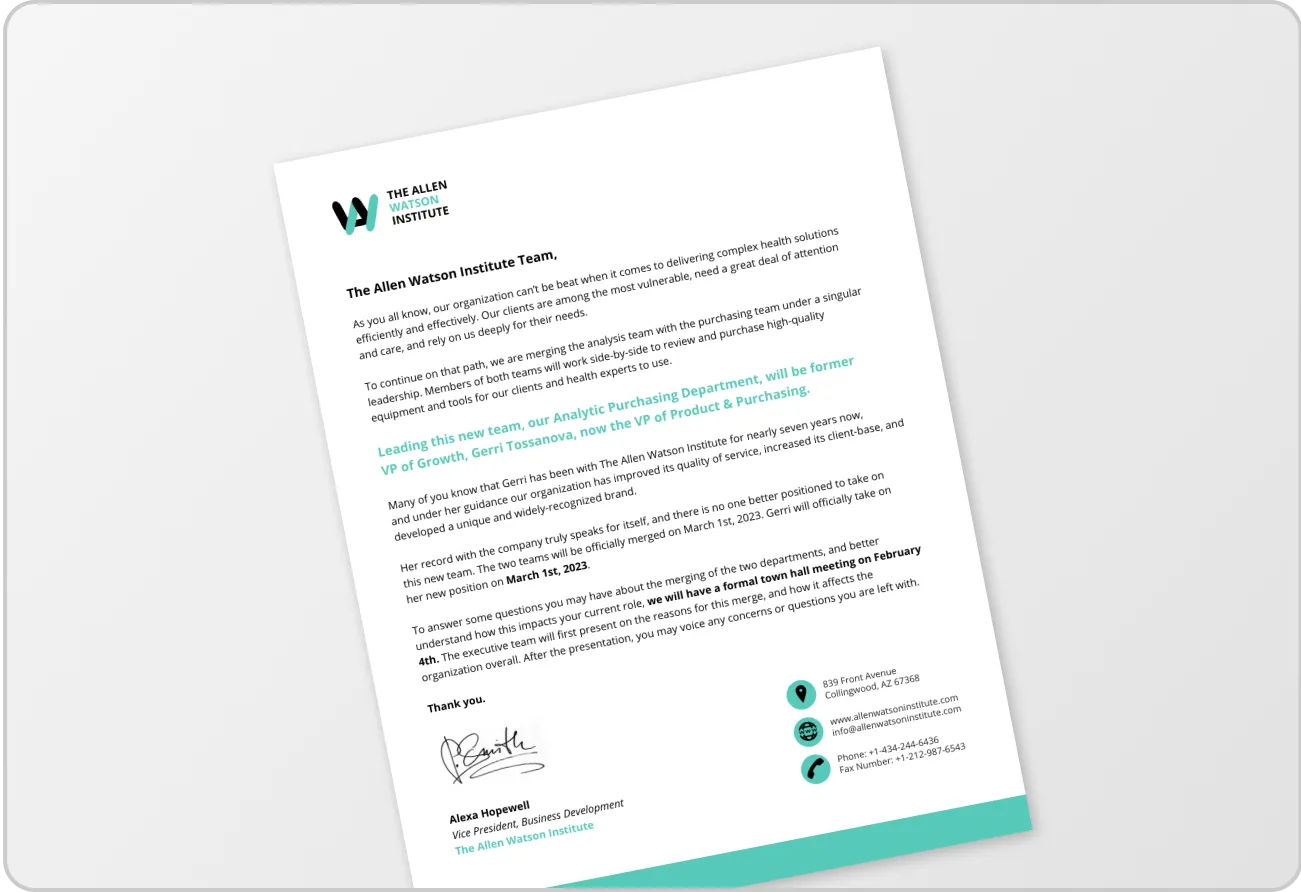
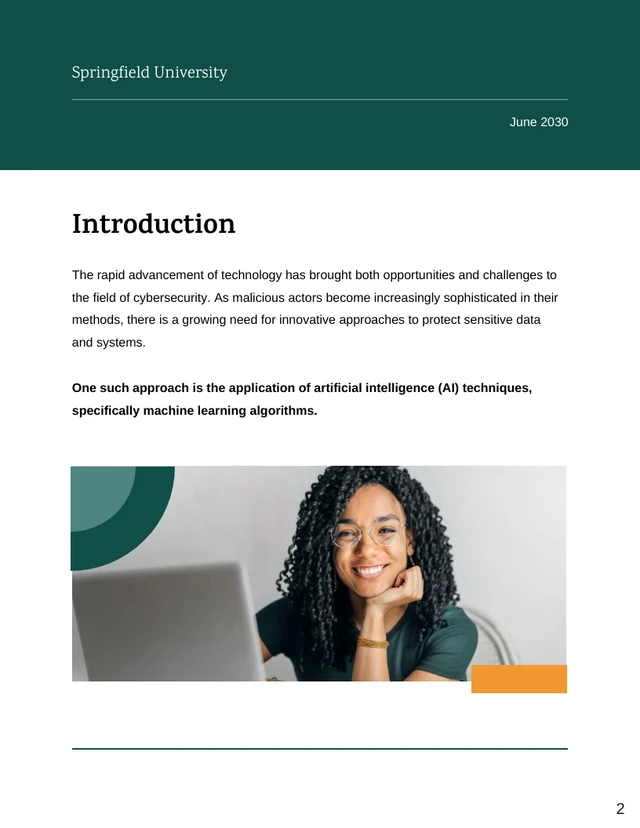
Once you’ve refined your statement of the problem and research questions with ChatGPT, using a clean proposal template can help make everything easier to follow. This cybersecurity research proposal template works especially well for organizing your problem statement, research gap and study objectives in a clearer, more structured way.
It’s a simple way to make dense academic content feel more polished and committee-ready without spending hours formatting everything yourself.
Step 5: Literature review
This is probably the most important rule in the entire article:
Do not rely on ChatGPT as your primary method for finding academic sources.
It’s much safer to use:
- Google Scholar
- Library databases
- Zotero
- Verified articles you already collected
Then use ChatGPT to help organize and synthesize those materials.
Better ways to use ChatGPT for literature reviews
- Generate database search strings
- Create inclusion/exclusion criteria
- Summarize abstracts you provide
- Identify recurring themes
- Build synthesis tables
- Compare methodologies across studies
Prompt: Build a themed literature review outline
“Here are my article abstracts and notes: [paste notes]
Create a themed literature review outline. Do not add any new sources or invent citations.”
Prompt: Create a synthesis matrix
“Using only the pasted studies, create a synthesis table including:
- citation
- methodology
- sample
- key findings
- limitations
- relevance to my research topic”
Prompt: Identify defensible research gaps
“Based only on these pasted sources, identify three research gaps that are genuinely supported by the literature. Do not invent studies or unsupported gaps.”
This is where ChatGPT becomes surprisingly good at spotting patterns across sources you’ve already collected.
Step 6: Methodology (brainstorm options, then lock a defensible design)
The methodology section is where reviewers start asking: “Can this study actually work?”
A strong methods section explains:
- Research design
- Sample or participants
- Data collection
- Measures or instruments
- Analysis approach
- Validity/trustworthiness
- Limitations
Prompt: Compare research designs
“Based on these research questions, propose 2–3 possible research designs.
For each:
- explain strengths and weaknesses
- discuss feasibility
- explain data collection methods
- identify ethical considerations”
Prompt: Draft the methodology section
“Draft a methodology section for this research proposal using future tense.
Include:
- research design
- participants/sample
- recruitment
- data collection
- analysis approach
- validity/trustworthiness
- limitations”
Prompt: Threats to validity
“Identify possible threats to validity, reliability or trustworthiness in this study design and suggest realistic mitigation strategies.”
Prompt: Reviewer challenge test
“Act as a skeptical reviewer evaluating this methodology section. What weaknesses, assumptions or feasibility concerns would you challenge?”
Honestly, this prompt is painfully helpful.
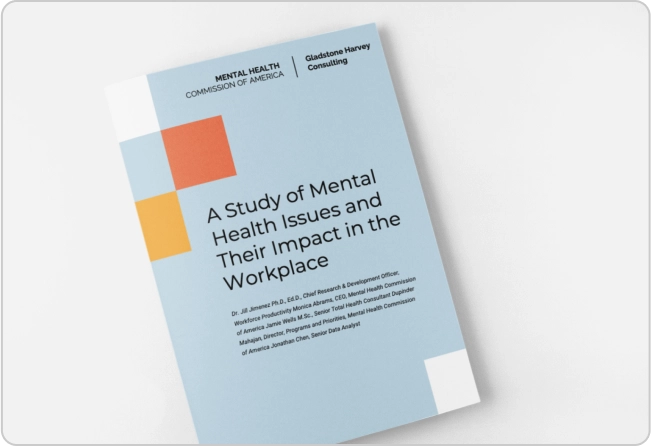
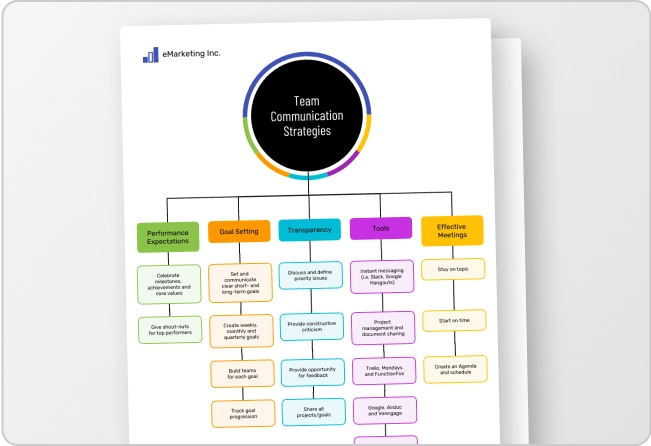
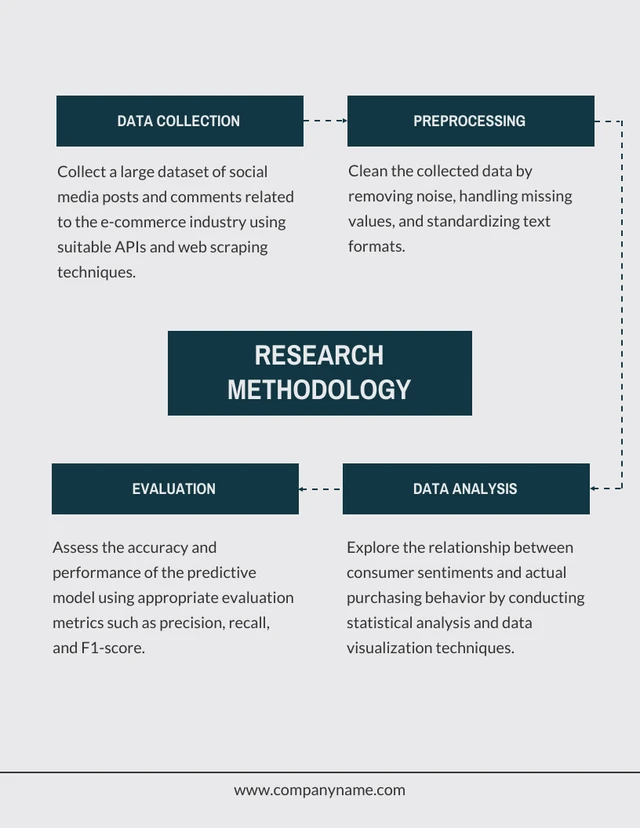
If your methodology section is starting to feel like a giant wall of text, research proposal examples like the one below give you a cleaner way to present things like recruitment plans, data collection methods and validity checks. The layout makes it easier to separate each part of the research design so reviewers can quickly understand how the study will actually work.
Step 7: Ethics, privacy, and what you should NOT paste into ChatGPT
This section matters a lot more than people realize.
Even if your proposal topic feels harmless, you still need to think carefully about confidentiality, consent and data protection especially if human participants are involved.
Never paste into ChatGPT
Avoid uploading:
- Identifiable participant information
- Patient or health data
- Proprietary company datasets
- Confidential institutional documents
- Unpublished results
- Sensitive interview transcripts
- Partner organization information
If your data would normally require ethical protection, don’t paste it directly into a public AI tool.
Safer alternatives
Instead:
- Anonymize examples
- Summarize sensitive content
- Remove identifying details
- Use institution-approved AI tools if available
- Keep confidential data offline
Prompt: Draft ethics section
“Draft an ethics section for this study covering:
- informed consent
- confidentiality
- data storage
- participant risk mitigation
- voluntary participation
- withdrawal rights”
Prompt: Data management plan
“Create a research data management plan outline covering storage, access, anonymization, retention and deletion procedures.”
Step 8: Timeline (and budget if required)
This section shows reviewers whether your project is realistically manageable.
Typical milestones include:
- Ethics or IRB approval
- Recruitment
- Data collection
- Analysis
- Writing
- Revision
- Submission
Prompt: Timeline table
“Create a realistic 6–12 month research project timeline table including milestones, deliverables and estimated completion dates.”
Prompt: Budget table
“Draft a simple research proposal budget table with short justifications for each expense category.
Include:
- participant incentives
- software/tools
- travel
- transcription
- materials
- contingency costs”
Even if your proposal doesn’t require a budget, thinking through costs often helps reveal feasibility issues early.
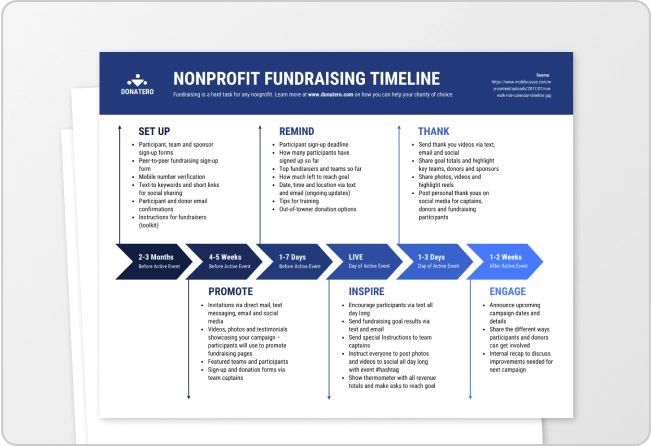
Timelines and budgets are usually where feasibility starts to become very real. A template like this makes it easier to lay out project phases, deadlines and research costs without everything blending into long blocks of text.
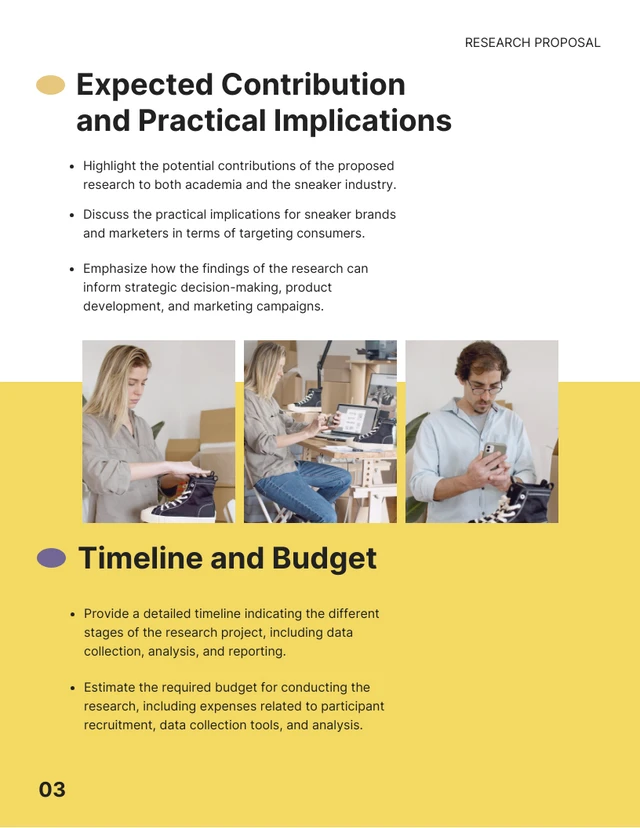
It’s especially useful for showing how your study will move from ethics approval to data collection and final submission in a way that feels realistic and well planned.
Step 9: Title and abstract (write these last)
A lot of people try writing the title first and then end up rewriting it 17 times.
It’s usually much easier to finalize your title and abstract after the proposal is mostly complete because you’ll have a clearer sense of your argument, methods and contribution.
Prompt: Generate title options
“Generate 10 research proposal title options for this study.
Include:
- 5 formal/informative academic titles
- 5 slightly more engaging but still professional titles”
Prompt: Draft the abstract
“Write a 200–300 word research proposal abstract including:
- research problem
- gap in the literature
- study aims
- methodology
- expected contribution
Use formal academic tone appropriate for [Master’s/PhD/grant] level.”
The citation-safe workflow (avoid fake references + plagiarism)
One of the biggest mistakes people make with ChatGPT is assuming it’s good at citations. It really isn’t.
ChatGPT can absolutely sound convincing while inventing article titles, fake DOIs and authors that don’t exist. If you use AI-generated references without checking them, you’re basically playing academic roulette. The safer approach is to use ChatGPT for synthesis and writing support, not source discovery.
Here’s a much safer workflow that keeps you in control of your sources from start to finish.
Step 1: Find your sources yourself
Start with actual academic databases and library tools, such as:
- Google Scholar
- JSTOR
- PubMed
- Scopus
- Your university library database
This part still needs human judgment because you’re deciding which studies are credible, relevant and useful for your research question.
Step 2: Save your citations properly
Once you find good sources, save them into a citation manager like:
- Zotero
- EndNote
- Mendeley
Or at the very least, keep a clean spreadsheet or document with:
- Authors
- Article title
- Journal
- Year
- DOI or URL
- Key findings and notes
Future-you will be extremely grateful for this.
Step 3: Only feed ChatGPT material you already verified
Instead of asking, “Find studies about X,” try feeding ChatGPT:
- Your own notes
- Abstracts from verified papers
- Quotes you selected
- Bullet points from articles you’ve read
Basically, keep ChatGPT working inside your research material instead of letting it invent new material from scratch.
Step 4: Ask for synthesis, not discovery
This is the sweet spot where ChatGPT becomes genuinely useful.
For example, instead of saying:
“Give me references about burnout in healthcare workers.”
Try:
“Using these three abstracts, identify common themes, disagreements and possible research gaps.”
That keeps the intellectual control with you while speeding up the writing process.
Step 5: Add citations manually
Once ChatGPT helps draft or organize the paragraph, insert your citations yourself using your citation manager or verified source list.
Do not blindly copy AI-generated citations into your proposal. Ever.
Step 6: Run a final verification check
Before submitting:
- Verify every citation exists
- Check author names and publication years
- Confirm the DOI works
- Run a similarity or plagiarism check
- Review paraphrased sections carefully
This final step catches way more issues than people expect.
If ChatGPT gives you citations anyway…
It probably will. Treat them as possible leads, not trustworthy references.
Before using them:
- Search the title in Google Scholar
- Verify the authors exist
- Check the journal is real
- Confirm the DOI matches the article
- Discard anything you can’t verify quickly
If you can’t independently confirm the source exists, don’t use it.
A quick plagiarism-safe paraphrasing rule
A surprisingly common problem with AI-assisted writing is “patchwriting”, basically rewriting sentences just enough to sound different while still copying the original structure too closely.
A safer approach:
- Quote directly when wording matters
- Keep page numbers for important quotations
- Rewrite ideas fully in your own structure and voice
- Avoid swapping random synonyms into copied sentences
- Compare your paraphrase against the original source afterward
If your paraphrase still sounds suspiciously close to the original paper, rewrite it again.
Will universities detect ChatGPT? (why compliance beats evasion)
A lot of students ask this question quietly in private tabs at 2 a.m.: Can universities actually detect ChatGPT?
The honest answer is: not reliably.
AI detection tools are far from perfect, and false positives happen all the time. Some human-written work gets flagged as AI-generated, while some heavily AI-assisted writing passes undetected. Even universities know these tools aren’t fully reliable yet.
If your content gets incorrectly flagged by AI detectors, you can humanize AI to avoid detection and improve readability. But focusing only on “beating detection” is kind of the wrong mindset anyway.
The real goal is to produce work that’s academically honest, policy-compliant and genuinely reflects your own thinking. If your proposal process is transparent and you can show how you developed your ideas, you’re already in a much stronger position than someone trying to hide AI use entirely.
If anyone ever questions your process, these things matter way more than trying to outsmart AI detectors:
- Early drafts and rough notes
- Annotated bibliography documents
- Research planning notes
- Version history in Google Docs or Word
- Saved ChatGPT prompts and outputs
- An AI contribution log showing how you used the tool
Think of ChatGPT like Grammarly or a brainstorming assistant, something supporting your workflow, not replacing your intellectual contribution.
Ironically, the students who use AI responsibly and transparently are usually much safer than the ones trying to conceal heavy AI use with zero documentation.
Prompt library (copy/paste): best prompts by proposal section
One thing I learned very quickly with ChatGPT: better prompts = dramatically better output.
If your prompt is vague, the response usually sounds like a generic Wikipedia summary written at 3 a.m. But when you give ChatGPT context, constraints and a clear task, it becomes way more useful for proposal drafting.
Here are some of the best prompts you can copy, paste and adapt for different sections of your research proposal.
1. Brainstorm a research topic
When to use:
You have a general area of interest but don’t know what to focus on yet.
Prompt:
“I’m interested in [topic/field]. Suggest 10 focused research proposal ideas suitable for a [Master’s/PhD] proposal. Include possible research gaps, target populations and research methods for each.”
What to check in the output:
- Are the topics actually researchable?
- Do the ideas feel specific enough?
- Are the suggested gaps realistic and current?
2. Narrow a broad topic into a clear research problem
When to use:
Your topic still feels way too broad.
Prompt:
“Help me narrow this topic into a focused research problem: [insert topic]. Suggest narrower angles, possible variables, target populations and feasible scopes for a [timeframe/program level].”
What to check in the output:
- Does the scope feel manageable?
- Is the problem clear and researchable?
- Could you realistically complete this study?
3. Draft a proposal outline
When to use:
You need structure before writing.
Prompt:
“Create a detailed research proposal outline for this topic: [topic]. Include headings and subheadings for introduction, literature review, methodology, ethics and expected outcomes.”
What to check in the output:
- Does it match your department’s rubric?
- Are any required sections missing?
- Is the flow logical?
If you want help organizing everything into a clearer structure before drafting, tools like Venngage’s AI Proposal Generator can also help map out sections like the introduction, literature review and methodology so the proposal flow feels easier to build from.
4. Improve your problem statement
When to use:
Your introduction feels vague or unfocused.
Prompt:
“Rewrite this problem statement to sound clearer, more academically focused and more specific: [paste paragraph]. Keep the tone formal and concise.”
What to check in the output:
- Does it clearly explain the problem?
- Is the research gap obvious?
- Did ChatGPT accidentally remove important nuance?
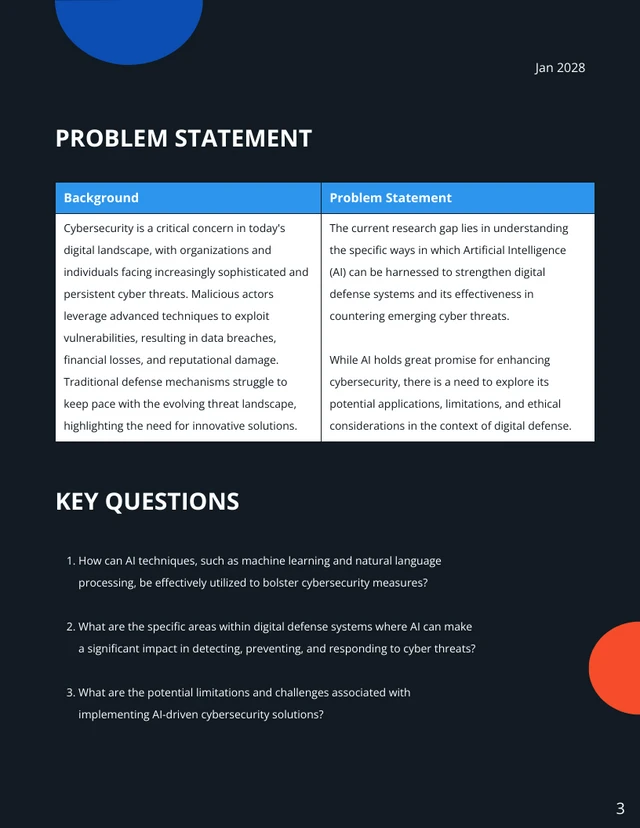
A strong problem statement needs to make the issue and research gap obvious within a few seconds of reading it. This research proposal template helps by giving each part of the introduction more breathing room, so the proposal feels focused instead of overly packed with information.
5. Organize your literature review
When to use:
You have too many articles and don’t know how to structure them.
Prompt:
“Using these article summaries/notes, identify common themes, disagreements, research trends and gaps. Suggest a logical structure for a literature review section.”
What to check in the output:
- Are the themes accurate?
- Did it oversimplify any studies?
- Are the research gaps actually supported?
6. Generate research questions or hypotheses
When to use:
You know the topic but haven’t finalized your research questions yet.
Prompt:
“Based on this research topic and gap, generate possible research questions and hypotheses suitable for a [qualitative/quantitative/mixed-methods] study: [paste topic + gap].”
What to check in the output:
- Are the questions measurable or answerable?
- Do they align with your intended methodology?
- Are they too broad?
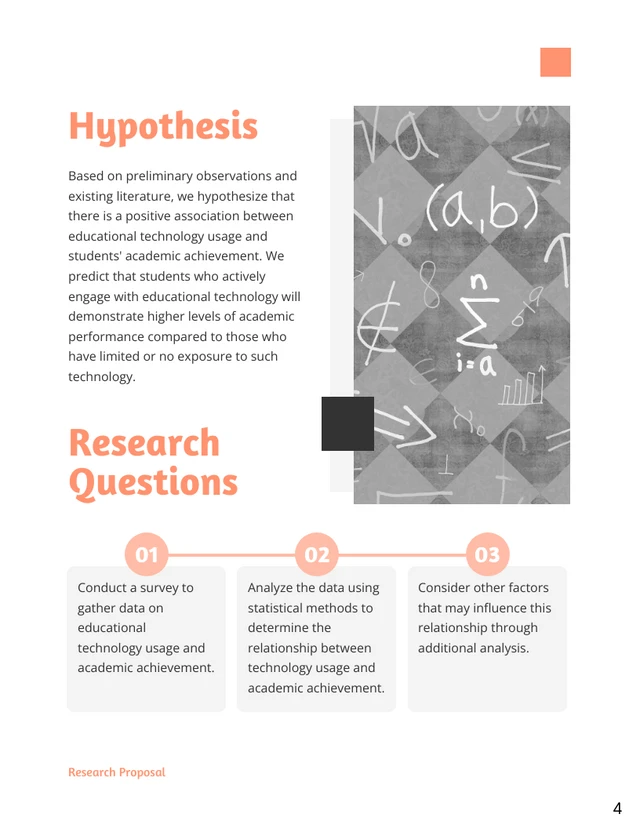
Research questions can look fine at first glance but still be way too broad or difficult to study in practice. Use this simple research proposal template to organize your questions, hypotheses and study focus more clearly so it’s easier to spot gaps, overlap or scope issues before you start writing the full proposal.
7. Build a methodology section
When to use:
You need help organizing your methods.
Prompt:
“Help me draft a methodology section for this research proposal. My study uses [method/design]. Include sample selection, data collection methods, ethical considerations and analysis approach.”
What to check in the output:
- Does the methodology actually fit the research questions?
- Are the methods realistic?
- Did ChatGPT include vague filler language?
8. Create interview or survey questions
When to use:
You’re designing qualitative interviews or questionnaires.
Prompt:
“Generate 10 semi-structured interview questions for a study about [topic]. The questions should align with these research objectives: [paste objectives].”
What to check in the output:
- Are the questions unbiased?
- Do they directly support your objectives?
- Are any questions repetitive or leading?
Once you’ve generated your interview or survey questions with ChatGPT, use Venngage’s research form templates or the AI Survey Generator to turn them into cleaner, more polished questionnaires that look better for distribution. It also makes it easier to review your questions for repetition, bias or unclear wording before sending them out to participants.
9. Make your writing sound more academic
When to use:
Your draft feels too casual or repetitive.
Prompt:
“Rewrite this paragraph in formal academic English suitable for a research proposal. Improve clarity and flow without changing the meaning.”
What to check in the output:
- Did it preserve your original meaning?
- Does it still sound human?
- Did it become overly wordy?
10. Critique your proposal against the rubric
When to use:
You want feedback before submission.
Prompt:
“Act as a graduate research reviewer. Evaluate this proposal against the following rubric: [paste rubric]. Identify weak sections, missing justification, unclear arguments and areas needing stronger evidence.”
What to check in the output:
- Are the critiques actually useful and specific?
- Did it identify real weaknesses?
- Does the feedback align with your department expectations?
11. Make your proposal more specific
When to use:
Your writing still feels generic.
Prompt:
“Review this section and identify sentences that sound vague, generic or overly broad. Rewrite them to be more precise, specific and research-focused.”
What to check in the output:
- Did it add meaningful detail?
- Are the revisions actually clearer?
- Did it accidentally invent unsupported claims?
12. Check alignment between sections
When to use:
You wrote sections separately and want to make sure they still connect logically.
Prompt:
“Review my research questions, methodology and analysis plan together. Identify any inconsistencies, weak alignment or missing connections.”
What to check in the output:
- Do the methods actually answer the research questions?
- Is the analysis plan realistic?
- Are there contradictions between sections?
13. Add academic caution and nuance
When to use:
Your writing sounds too certain or dramatic.
Prompt:
“Rewrite this section using a more balanced academic tone. Add appropriate caution, acknowledge limitations and flag statements that need stronger evidence.”
What to check in the output:
- Does it sound more credible?
- Did it remove exaggerated claims?
- Are unsupported statements clearly identified?
14. Proofread the final draft
When to use:
Right before submission.
Prompt:
“Proofread this research proposal for grammar, clarity, repetition, awkward phrasing and formatting inconsistencies. Do not change the meaning or invent new information.”
What to check in the output:
- Did it preserve your original argument?
- Are citations and formatting still correct?
- Did it accidentally rewrite factual content?
Common mistakes (and fixes)
Using ChatGPT for a research proposal can save a lot of time, but there are a few mistakes people constantly fall into. The good news is that most of them are fixable once you know what to look for.
Mistake #1: Vague prompts = generic writing
If your prompt is something like:
“Write a literature review about social media.”
…you’re probably going to get a painfully generic paragraph that sounds like it came from a motivational LinkedIn post.
Fix:
Add constraints and context.
Include:
- Your research focus
- Academic level
- Word count
- Theories or methods involved
- Your rubric requirements
- Your actual sources
The more specific your prompt is, the more useful the output becomes.
Mistake #2: Your methods don’t match your research questions
This happens a lot when people generate sections separately. Suddenly, the proposal is asking qualitative research questions with a quantitative methodology and nobody knows what’s happening anymore.
Fix:
Run an alignment check.
Try prompts like:
“Review my research questions and methodology section. Identify any mismatches between the research aims, data collection methods and analysis plan.”
This catches inconsistencies surprisingly well.
Mistake #3: Overconfident claims
ChatGPT loves sounding certain about things even when the evidence is weak or missing entirely.
Fix:
Ask it to add nuance and identify unsupported claims.
For example:
“Rewrite this section with more academic caution. Flag claims that need stronger evidence or citations.”
Academic writing usually values precision and restraint over dramatic certainty.
Mistake #4: Invented citations
Unfortunately, this one is still incredibly common.
Fix:
Use the citation-safe workflow from the previous section and verify every single reference manually.
Yes, every single one.
Mistake #5: Wrong tone or tense
Sometimes ChatGPT suddenly starts writing like a corporate consultant, a TED Talk speaker or a 19th-century philosopher halfway through your methodology section.
Fix:
Be extremely specific about tone and tense.
For example:
“Rewrite this in formal academic English using future tense appropriate for a research proposal aimed at a graduate admissions committee.”
Tiny prompt details make a huge difference here.
If you’re comparing design tools for proposals, forms or surveys, this Venngage vs Canva proposal design comparison breaks down some of the key differences.
Checklist: final review before you submit
Before you hit submit, do one final pass through your proposal. This is the part that helps catch all the small issues that can quietly cost marks later. One final step: run your proposal through a plagiarism and AI detection tool like Quetext to make sure it reflects your own original thinking.
Final proposal checklist
- Proposal follows the required rubric, headings and word count
- Research problem, gap and contribution are clearly explained
- Research questions align with the methodology and analysis plan
- Ethics, limitations and data management are included where relevant
- Every citation has been verified through Scholar or your library database
- Similarity or plagiarism check has been completed
- Quotes and paraphrases are properly cited
- AI use has been disclosed if required by your institution
- AI contribution notes or prompt history are saved
- Proposal has been proofread for clarity, flow and concision
Honestly, this final review step matters more than people think. A proposal with a strong idea but a few sloppy inconsistencies can suddenly feel much weaker to reviewers. Spending an extra hour checking citations, alignment and formatting is usually worth it.