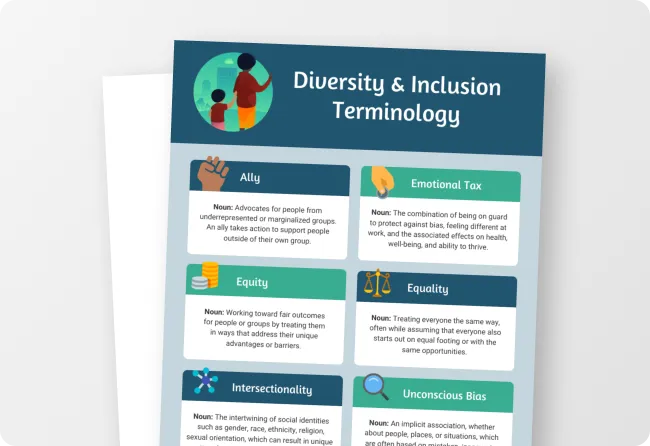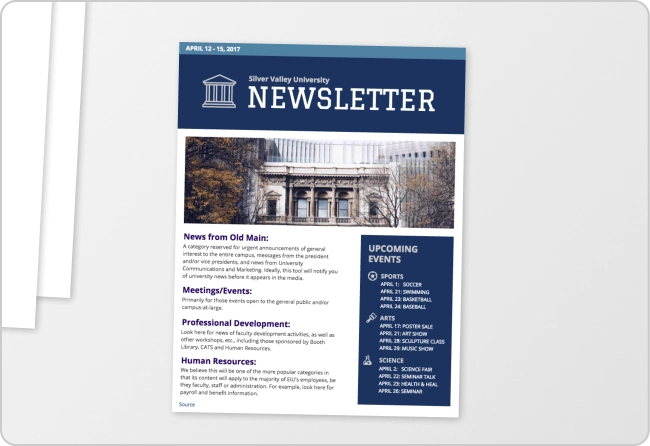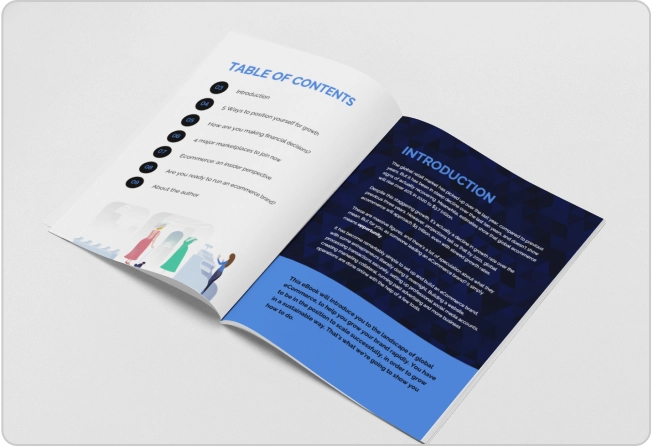


If you’re looking for infographic examples for students, it often helps to see real classroom-ready examples before creating one yourself. This guide showcases infographic examples for middle school students, explains why each format works and helps you choose the right type for different assignments.
Whether you’re working on a history timeline, science process, research project or class presentation, you’ll find practical examples, tips for when to use each infographic type and simple steps for creating your own infographic, no advanced design skills required.
What is an infographic example for students?
A student infographic is a visual project that presents information using a combination of text and design elements. Instead of relying on long paragraphs, it organizes key facts, ideas or data into a format that’s easier to scan, understand and remember.
Student infographics combine short text, icons, charts, illustrations and thoughtful layouts to make information easy to understand at a glance. They help students communicate complex topics more clearly while making presentations and assignments more engaging for their audience.
Common school uses include research projects, history timelines, science processes, compare-and-contrast assignments, presentations and health posters.
Why infographics work well for middle school students
Infographics help middle school students process information faster by combining text with visuals such as icons, charts, diagrams, and illustrations. According to EBSCO’s overview of visual learning, visual formats can improve understanding and retention by helping learners organize information and recognize patterns more easily.
They also make complex topics feel more manageable. Research has found that visual information improves comprehension, engagement, and information retention while reducing the cognitive load that often comes with text-heavy materials.
Creating infographics encourages students to summarize information, identify key takeaways, and explain concepts visually. A study available through PubMed Central (PMC) found that creating visual explanations can strengthen learning by helping students better understand processes and relationships between ideas.
Infographics also support multilingual learners and students who struggle with dense text. Resources from Colorín Colorado show that visuals make new vocabulary and concepts more accessible by providing additional context beyond written language.
9 infographic examples for middle school classrooms
In today’s visually-driven world, the use of infographics has become increasingly popular as an effective teaching tool. Integrating infographics into the classroom can significantly enhance the learning experience for students, making complex information more accessible and engaging.
Here are some innovative ways educators can leverage infographics to foster a dynamic learning environment:
1. Comparison infographic for classroom debates
Comparison infographics help students evaluate different perspectives, ideas or solutions side by side. They’re particularly useful in social studies, language arts and current events lessons where students need to analyze evidence before forming an opinion.
Teachers can use infographics to introduce a debate topic, while students can create their own comparison infographic as part of a persuasive writing or research assignment. Middle school students in grades 6–8 often use this format to practice critical thinking and evidence-based argumentation.
Best for: Classroom debates, persuasive writing assignments, social studies discussions
Why it works: Presenting information side by side makes similarities and differences easier to identify. Students can quickly compare evidence, organize their thoughts, and support their arguments with facts.

2. Career infographic for student-created classwork
Career infographics give students an opportunity to research occupations, explore future pathways, and present their findings in a visually engaging format. This type of assignment works well in career exploration, advisory, and life skills classes.
For example, educator Michelle Haiken has shared how students created career-focused infographics to research professions and communicate their interests through visual storytelling.
Best for: Career exploration projects, research assignments, presentation-based assessments
Why it works: Students practice research, summarization, and design skills while connecting classroom learning to real-world career opportunities.
3. Flowchart infographic for game-based learning
Flowchart infographics turn decision-making and problem-solving into an interactive experience. Teachers can use them to create quizzes, review activities, reading comprehension exercises or choose-your-own-path learning experiences.
This format works especially well in grades 6–8 because it breaks complex processes into manageable steps. Students follow a sequence of choices while practicing reading, logic, and subject-specific skills.
A recent report by The Joan Ganz Cooney Center entitled, Comparative Analysis of National Teacher Surveys indicated that 43% of the teachers used online video games for learning. Alternatively, you can also use web-based interactive infographics that gives students/viewers the control to modify the results. Flowchart-style infographics offer a similar interactive approach without requiring specialized software.
Best for: Game-based learning, reading comprehension activities, review exercises, science and math processes
Why it works: Students actively participate rather than passively consume information. The visual decision tree structure helps them understand cause-and-effect relationships and procedural thinking.
Check out examples of infographics for students with a quiz flow chart. These games measure and develop the student’s literacy, reading and math skills.
4. Study tips infographic as a visual aid
Study tip infographics help students organize learning strategies into a format that’s easy to review and remember. Teachers can use them as classroom handouts, revision guides or reference materials before quizzes and exams.
Instead of sharing a static image, a study tips infographic combines visuals, icons and concise explanations to present actionable advice in a more engaging format. This type of infographic works particularly well for grades 6–8 as students begin developing independent study habits.
Best for: Study skills lessons, exam preparation, homework support, classroom reference materials
Why it works: Students can quickly scan key strategies without reading lengthy text. The visual format also makes study techniques easier to recall when preparing for assessments.

5. Visual essay infographic for ELA or reflection assignments
Visual essay infographics allow students to present an argument, analyze a text, or reflect on a topic using a combination of visuals and concise written content. They work well as an alternative to traditional essays, especially when students need to summarize key ideas or present research findings.
This format is particularly effective in English Language Arts, social studies, and interdisciplinary projects. Students can combine quotes, evidence, images and personal insights into a single visual narrative that demonstrates their understanding of a topic.
Educators such as have shared examples of using infographic-based assignments as an alternative to traditional essays, with student work displayed throughout the school to showcase learning.
Best for: ELA assignments, literary analysis, reflection projects, cross-curricular research presentations
Why it works: Students practice summarizing information, supporting claims with evidence, and communicating ideas clearly while engaging different learning styles.
6. Health infographic for homework or research projects
Health infographics help students communicate research findings on topics related to wellness, nutrition, public health or environmental health. They are commonly used in science and health classes where students need to present facts, statistics, and recommendations in an accessible format.
Students can create health infographics to explain topics such as healthy habits, disease prevention, mental wellness nutrition, or environmental impacts on health. The format encourages them to evaluate sources, organize information, and present evidence visually.
Science educators have incorporated infographic assignments on public health and environmental topics to help students synthesize research and communicate complex issues more effectively.
Best for: Science projects, health education assignments, research presentations, public awareness campaigns
Why it works: Health topics often involve statistics and complex information. Infographics make these concepts easier to understand while helping students practice research, data interpretation, and communication skills.

7. Presentation infographic for student talks
Presentation infographics help students communicate key ideas without overwhelming their audience with text-heavy slides. They work well for book reports, research projects, science presentations and group assignments where students need to explain information clearly and confidently.
Instead of reading directly from slides, students can use an infographic as a visual guide during presentations. This encourages them to focus on storytelling, discussion and audience engagement while highlighting the most important information.
For example, educators have incorporated infographics into project-based learning and student presentations to help learners communicate complex ideas more effectively.
Best for: Student presentations, book reports, research projects, group assignments
Why it works: Infographics help students organize their thoughts into clear talking points while giving audiences a visual summary of the topic.

Mia MacMeekin is a lawyer, an educator and an instructional designer at Stratford University; Epigogy, Inc; Liberty University; US. She instructs students to use infographics on a crowdsourcing project in Ethics and any other presentation.
She also used them to explain work flow and assignments. In addition, she really makes good infographics herself. I have seen some and they are awesome! Check out her Pinterest account.
Looking for more presentation templates? Check out our collection of education presentations that you can use for your next lesson plan.
8. Reporting infographic for summaries and findings
Reporting infographics help students summarize research, present findings, and communicate key takeaways from a project. They work particularly well in science, social studies, and project-based learning environments where students need to share data or conclusions.
Students can use this format to turn lengthy reports into a concise visual summary that highlights important facts, statistics, and recommendations. It can also be shared with classmates, parents, or the broader school community.
Educators such as have highlighted the value of student-created infographics for communicating learning outcomes to local and global audiences.
Best for: Research summaries, project findings, science reports, inquiry-based learning
Why it works: Students learn to identify the most important information and present it in a format that is easy to understand and share.
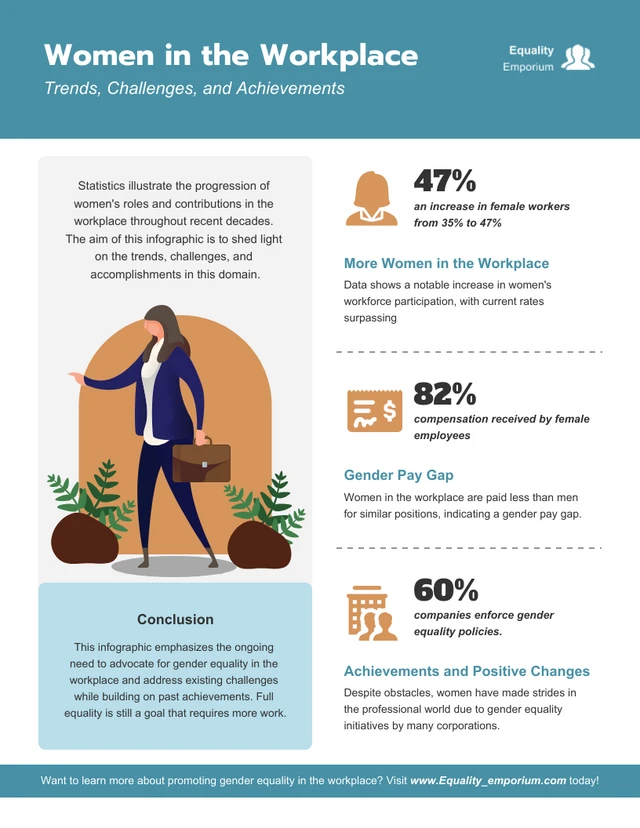
9. Learner diversity infographic for classroom culture
To promote a culture of inclusive learning within the classroom, consider creating an infographic on the diversity of learners to get to know your students and how to stimulate learning through their learning modalities.
Recognizing the diverse backgrounds, learning styles and needs of students allows educators to tailor their education proposal plans accordingly. By acknowledging and celebrating differences in culture, language, abilities and experiences, educators can create a welcoming and respectful environment.

The most common infographic types students can use
Not sure which infographic format fits your assignment? These are the most common infographic types used in middle school classrooms and the kinds of projects they’re best suited for.
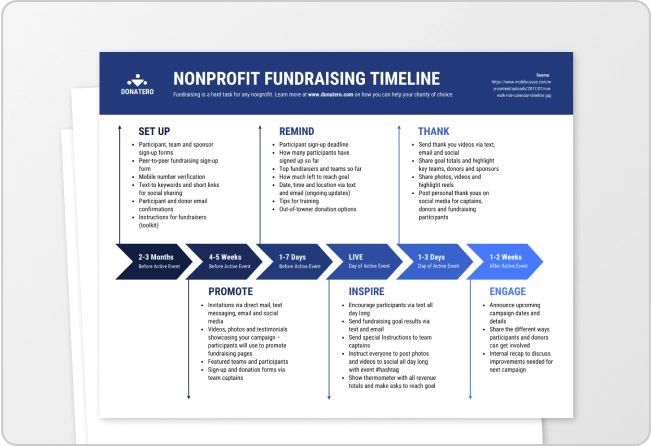
- Timeline infographic – Best for history projects, biographies and book reports where students need to show events in chronological order.
- Process infographic – Ideal for explaining science experiments, life cycles, mathematical procedures or any step-by-step process.
- Comparison infographic – Useful for compare-and-contrast assignments in ELA, social studies, and science, helping students evaluate similarities and differences between topics.
- Statistical infographic – Works well for surveys, research projects, and data analysis assignments where students need to present facts, percentages or trends visually.
- List infographic – Great for summarizing key concepts, study tips, vocabulary terms, reading takeaways, or research findings in a simple, scannable format.
- Geographic infographic – Perfect for geography, social studies, and cultural research projects that involve maps, locations, populations or regional comparisons.
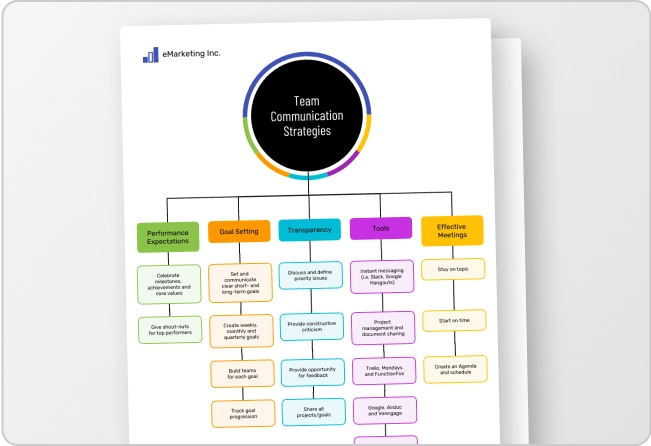
- Flowchart infographic – Best for decision-making activities, reading comprehension exercises, problem-solving assignments and visualizing cause-and-effect relationships.
Choosing the right infographic type helps students present information more clearly while matching the format to the learning objective of the assignment.
How to choose the right infographic type for a middle school assignment
A former middle school math teacher and now a Research Associate and Professional Development Coordinator at Tarrant Institute, Meredith Swallow shared an infographic about the relevance of Math on how middle-schoolers would want to learn their lesson in her article.
The infographic statistics state that 48% of Middle-schoolers would like learning outside of school and prefer using technology for 8 hours outside of school in learning. This is where Educational infographics become handy for a better and more effective teaching strategy.
In addition, the statistics show that 48% of middle schoolers want hands-on applications. Why don’t we let them do the work on their own at home to get great learning results?
Middle schoolers’ minds are creative, impulsive, moody and easily bummed out. That’s why infographics could make a big impact on how they learn if incorporated into learning. They want to be engaged, connected, motivated and independent.
The best infographic format depends on what you’re trying to communicate. Before choosing a template, think about the goal of the assignment and the type of information you need to present.
- Need to show dates or historical events? Use a timeline infographic.
- Need to explain a sequence of steps? Use a process infographic.
- Need to compare two ideas, topics or viewpoints? Use a comparison infographic.
- Need to present survey results, experiment findings or class data? Use a statistical infographic.
- Need to summarize facts, tips or key takeaways? Use a list infographic.
- Need to show locations, regions or geographic information? Use a geographic infographic.
The most effective infographic isn’t necessarily the most visually impressive one—it’s the one that matches the assignment goal and helps your audience understand the information quickly.
How to make an infographic for students in 7 simple steps
Creating an infographic doesn’t have to be complicated. Follow these simple steps to turn your research, ideas or class project into a clear and engaging visual.
1. Choose a topic
Start with a topic, question, or assignment you want to explain. This could be a historical event, science process, book summary, survey result, or research project.
2. Define the main message
Decide what you want your audience to learn. Focus on one central idea rather than trying to include everything you’ve researched.
3. Gather facts and sources
Collect key information, statistics, quotes and supporting details from reliable sources. Keep only the facts that directly support your main message.
4. Organize the information
Group related ideas together and arrange them in a logical order. A simple outline can help you decide what information belongs in each section.
5. Choose the infographic type
Select a format that matches your goal. For example, use a timeline for historical events, a process infographic for steps or a comparison infographic for contrasting ideas.
6. Design with short text and clear visuals
Use concise headings, brief descriptions, icons, charts and images to communicate information quickly. For middle school audiences, keep text easy to scan and avoid large blocks of writing.
7. Review and export
Proofread your content, check your facts, and make sure the design is easy to follow. Once everything looks good, export your infographic and submit or present it.
School project tip: Always cite your sources when using facts, statistics, quotes or images from outside references.
Design tip: If a section feels too text-heavy, try shortening the wording or replacing some text with visuals to improve readability.
Easy tools students can use to create an infographic
Students don’t need advanced design skills to create an infographic. Many beginner-friendly tools offer templates, drag-and-drop editing and simple sharing options for school projects.
- Venngage – Offers infographic templates that students can customize for research projects, presentations and classroom assignments.
- Canva – Features drag-and-drop editing and ready-made infographic layouts for quick project creation.
- Microsoft PowerPoint – Useful for creating simple infographics with familiar presentation tools and easy export options.
- Google Slides – Makes it easy for students to collaborate, share projects with teachers and present their work online.
- Adobe Express – Provides templates and beginner-friendly editing tools for creating visual school projects.
The best tool is usually the one students already have access to and feel comfortable using. Focus on communicating information clearly rather than using advanced design features.
Start with one simple infographic students can actually use
When information is easier to scan, compare, and remember, students are more likely to stay engaged and understand key concepts. The most effective classroom infographics aren’t the most elaborate, they’re the ones that match the assignment, whether that’s a timeline for dates, a process infographic for steps, a comparison infographic for contrasting ideas or a statistical infographic for data.
Infographics help students communicate clearly, organize information and demonstrate what they’ve learned without needing advanced design skills.
Next step: Pick one upcoming assignment, choose the infographic type that fits the goal, and customize one of the infographic templates from this article.
References
- EBSCO Research Starters: Visual Learning
- Colorín Colorado: Using Visuals with English Language Learners
- Joan Ganz Cooney Center: Comparative Analysis of National Teacher Surveys
- Al-Ishlah: Research on visual learning and retention