

If you’ve been asked to create or review a performance development plan, it’s normal to wonder whether it’s a growth tool or a warning sign.
In most cases, a performance development plan (PDP) is designed to support employee development, clearer expectations and better performance, not automatically serve as a disciplinary action. While PDPs are often confused with performance improvement plans (PIPs), they are not the same thing.
In this guide, you’ll learn what a performance development plan includes, how to write one, how it differs from a PIP and what a strong example looks like.
What is a performance development plan?
A performance development plan (PDP) is a structured plan that helps employees improve skills, set career goals and track professional growth over time. It typically outlines development goals, action steps, timelines and support from managers to help employees succeed in their current and future roles.
Unlike a performance improvement plan (PIP), a PDP is usually developmental rather than disciplinary. It focuses on growth, career progression and skill-building, not correcting serious performance issues.
Some companies also use terms like individual development plan (IDP) and employee development plan interchangeably with PDP. While the wording may vary, they generally refer to the same type of growth-focused plan. A PIP, however, is different because it is typically used to address underperformance.
Managers, employees and HR teams may all use performance development plans to support career conversations, goal-setting and employee growth.
An employee development plan describes the process needed to help an individual achieve their professional goals. It covers their career goals, the steps necessary to achieve those goals and the timeframe by which each goal should be met.
This employee development plan template is a good example:

Employee development plans usually include both short-term and long-term goals.
For example, a content marketer may have a short-term development goal of mastering writing long-form content within six months, and a long-term goal of becoming a content marketing manager in five years.
To create a professional development plan in this scenario, the content marketer will need to work with their manager to align their personal development goals with the company’s business goals, then discuss the steps and/or tasks they need to complete to reach those goals. Some of these tasks could be:
- Ideate, research and write four original blog posts per month, each ranging from 1,000 to 2,000 words
- Ideate, research and write one white paper per quarter, generating X to Y leads
- Report on blog post performance in terms of traffic, search result ranking and conversion
- Update blog posts if necessary, based on their performance
They can also turn those smaller tasks into SMART goals to better keep track of them:

Employee development plans are helpful not only for workers but for organizations as well, and there are many benefits for organizations to develop these strategies, both company-wide and for individual team members.
Related: Employee Development: Definition, Benefits & Visual Aids
Is a performance development plan the same as a PIP?
No. A performance development plan (PDP) and a performance improvement plan (PIP) serve different purposes, even though both involve employee performance and goal-setting.
A PDP focuses on employee growth, career development and skill-building. A PIP, on the other hand, is typically used when an employee is not meeting performance expectations and needs to improve within a specific timeframe.
| Aspect | Performance Development Plan (PDP) | Performance Improvement Plan (PIP) |
|---|---|---|
| Primary purpose | Support employee growth and long-term career development | Address performance issues and correct underperformance |
| Tone | Developmental and collaborative | Corrective and more formal |
| Typical use case | Career progression, skill development or goal-setting | Missed targets, behavioral concerns or ongoing performance problems |
| Risk of termination | Usually low or unrelated | May lead to termination if expectations are not met |
| Ownership | Often employee-led with manager support | Typically manager- and HR-led |
Note: Companies may use these terms inconsistently, so readers should check internal HR policy.
Keep in mind that companies may use these terms inconsistently, so it’s always a good idea to check your internal HR policies for the exact definitions and processes used within your organization.
When should you use a performance development plan?
A performance development plan can be useful anytime an employee wants to improve skills, grow in their role or prepare for future career opportunities. Unlike corrective performance plans, PDPs are proactive and growth-focused.
Organizations commonly use performance development plans during:
- Employee onboarding and role transitions
- Annual or quarterly performance reviews
- Career growth and promotion planning
- Leadership development initiatives
- Skill-building for new responsibilities or tools
- Succession planning and internal mobility
- Coaching conversations between managers and employees
- Employee retention and engagement efforts
For example, a manager may create a PDP for an employee who wants to move into a leadership role, improve project management skills or strengthen communication abilities.
Performance development plans can also help employees feel more supported because they provide clear expectations, measurable goals and ongoing feedback opportunities.
Why performance development plans matter
Organizations that invest in employee development can realize many benefits, the least of which is potentially improving the company’s bottom line through recognizing and rewarding employees who show potential. Here’s a look at the biggest benefits of employee development plans.
1. Limiting turnover
We already referenced this survey, but it bears repeating here — 94% of people said they’d stick with a job if the company helped them learn new skills and develop as a professional.
2. Building skills
Career development plans are often focused on adding tools to a team member’s skill set. In doing so, the company itself benefits from their newfound skills. A 2021 LinkedIn survey found that 59% of corporate learning and development programs were focused on upskilling and reskilling.

3. Boosting engagement & retention
Workers who feel they’re going nowhere in your organization are likely to find somewhere else to go. Engaging team members through training and development programs ensure the new role they find is within your organization.
Read more: How to Improve Employee Engagement with Visuals

4. Improving company outlook
For organizations that are looking to expand into new products or services, building the skills of existing employees is often the best way to achieve their goals. In this way, they end up with team members who have the new skills they need and the past institutional knowledge that makes them more efficient.
Looking to create employee development programs and boost retention by as much as 80%? Venngage can help you with that.
Simply create a free account and start designing infographics, presentations, and microlearning assets to build a strong employee training and development program.
Here’s an example of a flyer outlining the benefits of using Venngage for your company’s learning and development program, but you can customize it for your own training program proposal:

What should a performance development plan include?
A strong performance development plan gives employees and managers a clear roadmap for growth. While the format may vary between organizations, most plans include these core elements:
- Current role and performance summary: A quick overview of the employee’s responsibilities, recent performance and current skill level.
- Strengths and competencies: Key skills, achievements and areas where the employee already performs well.
- Areas for improvement: Specific skills, knowledge gaps or behaviors the employee wants or needs to develop.
- Development goals: Short-term and long-term goals tied to career growth and business objectives.
- Action steps: Clear tasks, training opportunities or projects needed to achieve each goal.
- Support/resources needed: Mentorship, courses, tools, coaching or manager support required for success.
- Timeline and milestones: Target dates and checkpoints to track progress over time.
- Success measures/KPIs: Metrics or outcomes used to evaluate progress and goal completion.
- Check-in schedule: Regular review meetings between the employee and manager to discuss progress and feedback.
- Employee and manager responsibilities: A breakdown of what each person is accountable for throughout the plan.
Quick-start PDP checklist
How to write a performance development plan
Organizations without formal learning and development programs may not have a consistent process for creating performance development plans.
The good news is that an effective PDP does not need to be overly complicated. The key is to create a plan that is specific, measurable and realistic for both the employee and manager.
Follow these six steps to build a performance development plan that supports employee growth and business goals.
1. Identify the performance or development need
Start by identifying the skill gap, performance issue or growth opportunity the employee wants to address. This could involve communication challenges, leadership readiness, technical skill gaps or productivity concerns.
Managers can guide the conversation with prompts like:
- “What skill or outcome needs to improve?”
- “What challenges are affecting performance or growth right now?”
- “What career goals does the employee want to work toward?”
Here’s an example of a matrix describing the skills needed for different marketing roles. Customize this template to help employees identify skill gaps and growth opportunities.

As with any new major initiative, having support from leadership is crucial.
Programs often sputter out because there’s no managerial-level sponsor or champion. In some cases, the company will need to invest in training, and this requires sign-off from executives and other leaders.
Once you’ve got support from management, start thinking about the business’s goals.
At their core, employee development plans are focused on company goals, though the individual professional is the conduit for those goals. Still, understanding what the organization wants from employee development plans is important.
Organizational goals for individual workers will likely vary from person to person. Examples include improving employee retention, succession planning, upskilling or reskilling — the options are limitless.
2. Define clear goals
Once the development need is identified, create specific goals tied to both employee growth and organizational priorities. The strongest performance development plans align personal career goals with business outcomes whenever possible.
For example, an employee may want to improve leadership skills while the organization wants to strengthen internal succession planning.
Instead of vague goals like “improve communication,” use measurable goals such as:
- Lead weekly client presentations for the next quarter
- Reduce project turnaround time by 15% within three months
- Complete leadership training before the next review cycle
During this stage, managers can ask:
- “What would success look like six months from now?”
- “How does this goal support both the employee and the team?”
3. Choose action steps
Next, determine the development activities that will help the employee achieve their goals. Different goals require different types of support and learning methods.
Examples include:
- Coaching sessions to improve communication skills
- Job shadowing to prepare for a future role
- Technical training courses to close skill gaps
- Stretch assignments to develop leadership experience
- Cross-functional projects to strengthen collaboration skills
Consider creating a worksheet or checklist like this one to help employees track expectations and development activities.

It’s important both you and your reports prepare for this meeting beforehand. Ask them to think of professional and personal growth areas, and take your own notes on this as well. There are meeting minutes samples that you can use for this, so you can record the conversation and revisit it when necessary.
4. Set timelines and milestones
Break larger goals into smaller milestones with realistic deadlines. This helps employees stay motivated while giving managers clear checkpoints to review progress.
For example:
- Complete communication training by July
- Lead first team presentation by August
- Improve customer satisfaction score by the next quarterly review
Clear timelines also make it easier to adjust the plan if priorities or workloads change.
5. Decide how progress will be measured
Every performance development plan should include measurable outcomes or KPIs. Without clear success metrics, it becomes difficult to evaluate whether the plan is working.
Depending on the role, progress may be measured through:
- Customer satisfaction scores
- Project completion rates
- Productivity improvements
- Certification completion
- Peer or manager feedback
- Reduced error rates
You can also organize a team meeting where you all identify personal goals for each team member.
How often should you meet with your employees about professional development? This typically happens at least once per year, or whenever your reports request a meeting. Some companies have performance reviews every six months, so you can meet with your employee to discuss development goals then.

In the meeting, ask them what they want to achieve in your organization, what skills they would want to develop and what their long-term and short-term goals are for their careers.
6. Schedule follow-up conversations
Performance development plans should evolve through regular conversations, not sit untouched after creation. Schedule recurring check-ins so employees and managers can review progress, discuss challenges and update goals when needed.
Check in with them regularly to ensure they have the support they need and that they remain engaged and interested in the learning they’re doing. An employee monitoring program should be used to track productivity and understand how the work is done.
Managers can ask questions such as:
- “What support will the employee need to succeed?”
- “What’s working well so far?”
- “What adjustments would make the plan more effective?”
Regular follow-up conversations help keep employees engaged and prevent the performance development plan from becoming a one-time paperwork exercise.
Employee development methods
In most employee development plans, multiple methods will be used to achieve the desired outcome. Some goals are easier to achieve, while others will take more time, so organizations need to be agile enough to provide the tools employees need to build the necessary skills.
That includes but isn’t limited to the following:
- Coaching
- Mentoring
- Cross-training
- Job shadowing
- Job rotation
- Assessment centers
- Online employee development
Nearly 60% of learning and development professionals expect their companies to spend more on online learning, according to LinkedIn. Make the most of your company’s investment by creating a robust e-learning course.

Examples of development goals and areas for improvement
Employee development plans should focus on what team members want to achieve and how they can go about doing that. The process involves identifying their existing skills to see what they lack or where they could improve.
Some employee development plans will focus on broad, soft skills like:
- Organization
- Interpersonal communication
- Time management
- Listening
- Collaboration
- Conflict resolution
- Adaptability
- Change management
- Decision making
Below are common areas for improvement along with sample development goals, action steps and success metrics that managers and employees can adapt to different roles and industries.
Communication
- Example development goal: Improve client communication and presentation confidence within the next quarter
- Example action step: Attend one communication workshop and lead monthly team update presentations
- Example success metric: Increase client satisfaction scores from 85% to 92% within three months
Time management
- Example development goal: Improve task prioritization and reduce missed deadlines
- Example action step: Use weekly planning tools and block dedicated focus time each day
- Example success metric: Complete 95% of assigned tasks on schedule for three consecutive months
Leadership
- Example development goal: Strengthen leadership and delegation skills to prepare for a management role
- Example action step: Mentor a junior employee and lead one cross-functional project
- Example success metric: Receive positive leadership feedback from team members and successfully deliver the project on time
Collaboration
- Example development goal: Improve cross-team collaboration and participation in group projects
- Example action step: Join weekly interdepartmental meetings and contribute updates proactively
- Example success metric: Increase peer collaboration feedback scores during the next performance review cycle
Technical skills
- Example development goal: Build advanced data analysis and reporting skills
- Example action step: Complete an online certification course and apply the skills in monthly reporting tasks
- Example success metric: Reduce reporting errors by 30% and complete reports faster within six months
Performance development plan template and example
Before you start creating an employee development plan, let’s take a look at some templates you can use! These include both blank and filled-out employee development plan samples that can help inspire you with development plan ideas as well.

Customize this process with the steps you’ve developed to make sure your team members are fully briefed on what their responsibilities will be as they work through the employee development process.

This individual development plan can be easily customized for your organization’s needs. It’s especially useful for organizations with new or nonexistent training and development programs, as it includes examples to help inspire workers and managers.
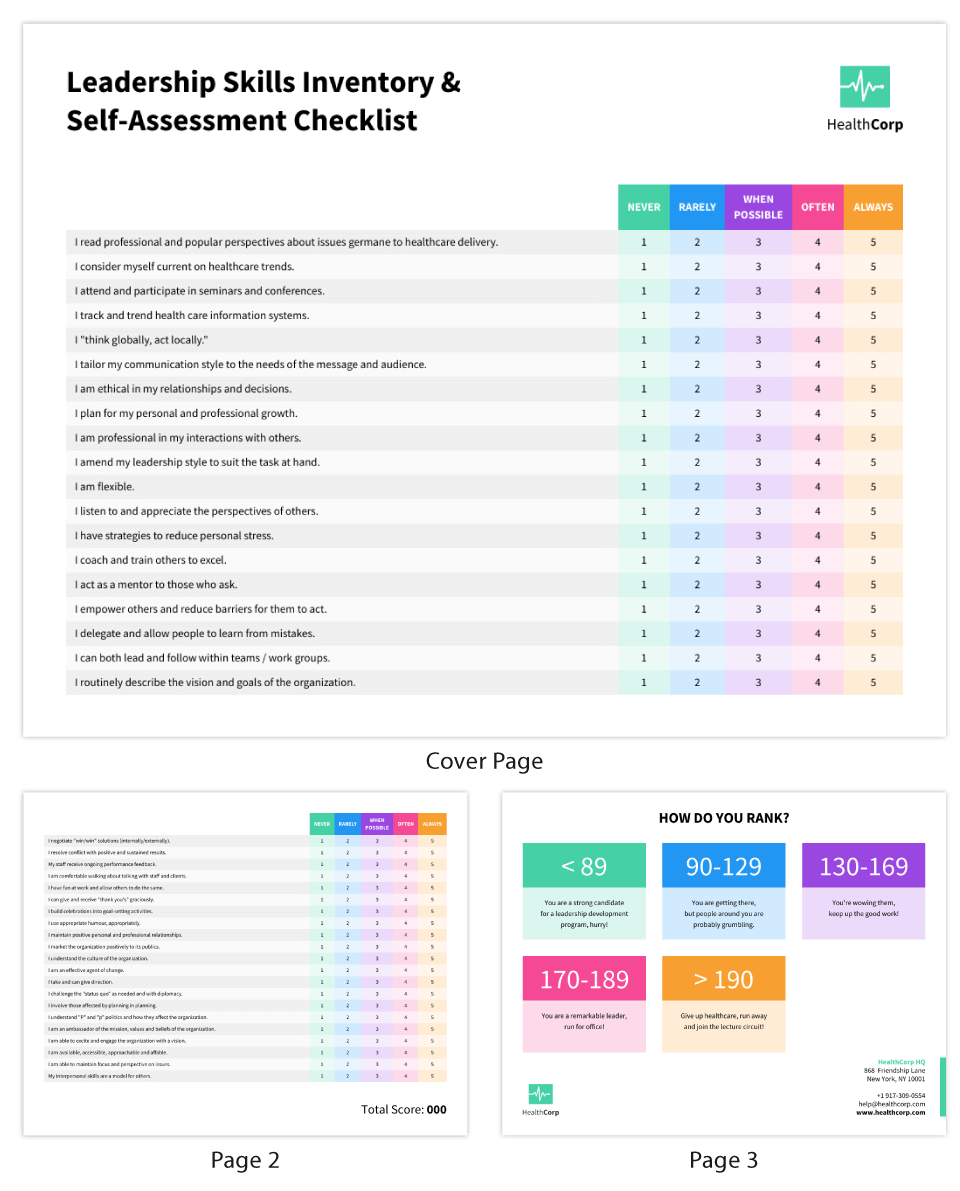
If you’re considering a young or inexperienced team member for leadership positions, have them complete this self-assessment. Customize it to add tasks or competencies specific to the job for which you’re considering them.

Monitoring progress during any process is important, but professionals taking part in employee development are especially interested in knowing they’re on the right track. Modify this performance matrix every few weeks to keep them up to date.

Though this infographic is focused on a career change, which you may not want to encourage, you can easily customize it to add the steps involved in the development plan you and your employee created together.
Seeing a completed performance development plan can make it easier to understand how to structure goals, timelines and success metrics in real situations. Here’s a simple example of a PDP for a customer service employee focused on improving communication and time management skills.
| Field | Example |
|---|---|
| Employee role | Customer Service Representative |
| Current challenge | Difficulty managing a high volume of support tickets while maintaining consistent communication with customers. |
| Development goal | Improve customer communication skills and reduce average ticket response time by 20% within three months. |
| Action steps |
• Complete customer communication training course
• Shadow a senior support specialist twice per month • Use daily prioritization and time-blocking methods • Practice de-escalation techniques during weekly coaching sessions |
| Support provided | Manager coaching, access to training resources and weekly performance feedback sessions. |
| Timeline | 90-day development plan with monthly progress reviews. |
| Success metrics |
• 20% faster average response time
• Customer satisfaction score improves from 82% to 90% • Reduction in escalated support tickets |
| Review dates | June 15, July 15 and August 15 |
You can adapt this structure in Venngage using customizable plan templates that make it easier to document goals, track progress and update development plans over time.
Who is responsible for a performance development plan?
Performance development plans work best when responsibility is shared between employees, managers and HR teams. Each group plays a different role in making the plan actionable, measurable and useful over time.
Employee responsibilities
Employees are responsible for engaging with the plan, following through on action steps and communicating progress or challenges during check-ins. They also help identify career goals, development interests and areas where they want additional support or training.
An individual development plan is a type of performance development plan focused specifically on helping professionals achieve their career goals and strengthen long-term skills.
The above worksheet is a good example of an individual development training plan that allows a team member and their manager to determine skills and tools the worker lacks as well as the goals they hope to achieve.
Manager responsibilities
Managers are responsible for providing coaching, setting clear expectations and supporting employees throughout the development process. This may include offering feedback, recommending training opportunities, tracking progress and helping employees connect their goals to business priorities.
Managers also play an important role in keeping the plan active through regular check-ins and measurable progress reviews.
HR responsibilities
HR teams are typically responsible for providing templates, maintaining consistency across teams and guiding managers on company policies or performance development processes.
In some organizations, HR may also support succession planning, leadership development initiatives and company-wide upskilling programs. According to the Society for Human Resource Management and Chartered Institute of Personnel and Development, organizations that invest in employee development and continuous learning often see stronger engagement and retention outcomes.

This leadership readiness checklist is an example of how organizations can use development planning to prepare employees for future leadership opportunities.
Shared ownership helps prevent performance development plans from becoming “paperwork only” by ensuring employees, managers and HR teams all stay actively involved throughout the process.
References
- SHRM (Society for Human Resource Management) — Research and guidance on employee development, retention and workplace performance
- CIPD (Chartered Institute of Personnel and Development) — HR and learning & development best practices and workplace research
- CIPD Knowledge Hub — Evidence-based resources on employee learning, engagement and people management
- LinkedIn Workplace Learning Report — Data on workplace learning, upskilling and employee retention
- U.S. Bureau of Labor Statistics — Workforce, labor market and training data
Common mistakes to avoid when creating a performance development plan
Even well-intentioned performance development plans can become ineffective if goals are unclear or follow-through is inconsistent. Avoiding these common mistakes can make the plan more useful for both employees and managers.
- Setting vague goals without clear outcomes or measurable success metrics
- Creating unrealistic timelines or too many goals at once
- Treating the plan like a one-time document instead of revisiting it regularly
- Focusing only on weaknesses instead of also building on employee strengths
- Failing to define KPIs or ways to measure progress
- Providing little manager support, coaching or follow-up
- Ignoring employee input during the goal-setting process
- Using generic goals that are not tied to the employee’s role or career path
- Forgetting to schedule regular check-ins and progress reviews
- Overcomplicating the plan with too many tasks or unnecessary details
Frequently asked questions about performance development plans
Is a performance development plan bad?
This depends on the goal and the line of work the employee current performs.
For example, a fairly junior employee aiming to become a team lead may have a one- or two-year career development goals. On the other hand, a manager aiming to become a company leader may have much longer-term goals, which should also align more with the organizational goals.
Of course, if you’re planning far into the future, you should also have smaller goals to keep track along the way.
Does a performance development plan always lead to termination?
In this situation, make sure you offer your employees advice where you can while connecting them to different resources that align more with their career path.
Refer to the different development areas: you may not be able to help your employees with technical skill development, but you can offer advice on personal development areas like negotiation skills, change management, project management etc.
Related: 11 (Non-Boring) Training Checklist Templates to Keep Employees on Track
Employee development plans prove to your workers that you are invested in their future
A performance development plan should create clarity and direction, not anxiety about job security. The strongest PDPs are collaborative, specific and measurable, with clearly defined goals, action steps, support resources and review dates that keep progress visible over time.
A PDP also works best when both the employee and manager actively participate in the process. Without regular follow-through and honest check-ins, even well-written plans can quickly turn into paperwork instead of meaningful development.
When done well, a performance development plan can improve performance while also building trust, confidence and long-term career momentum. Use the example and customizable Venngage templates in this guide to draft or refine a plan that’s easy for employees, managers and HR teams to review, update and put into action.