

Why trust this guide:
Venngage has helped thousands of teams design ebooks, from lead magnets to full educational guides. The examples in this article were selected to show different use cases, design patterns, and audience types, not just polished templates.
Finding good ebook inspiration is harder than it sounds. A lot of examples are either too generic or look nice but don’t explain what makes them work. If you’re staring at a blank canvas trying to figure out where to start, you’ve probably experienced this frustration.
This guide gives you real ebook examples by category, a breakdown of why each one works, and practical ideas that will inspire you for your own project. You’ll see examples across six types: lead magnets, business and marketing ebooks, educational guides, lifestyle content, creative formats, and interactive designs. Whether your goal is to generate leads, build authority, or share expertise, you’ll find a template here that fits.

What makes a good ebook example
Before diving into the examples, it helps to know what to look for. A well-designed ebook doesn’t just look good. It should serve a specific purpose, for a specific reader, in a format that makes sense for both. Here are the five things the strongest examples in this article have in common:
You’ll find these five criteria mentioned throughout the examples sections as a short ‘Why it works’ note under each category.
Ebook examples by type
The examples below are grouped by use case. Each category includes notes on who it’s best for, what makes it effective, and a key takeaway you can apply directly.
1. Lead magnet ebook examples
Type: PDF lead magnet
Best for: B2B brands, SaaS companies, consultants, agencies
Why it works:
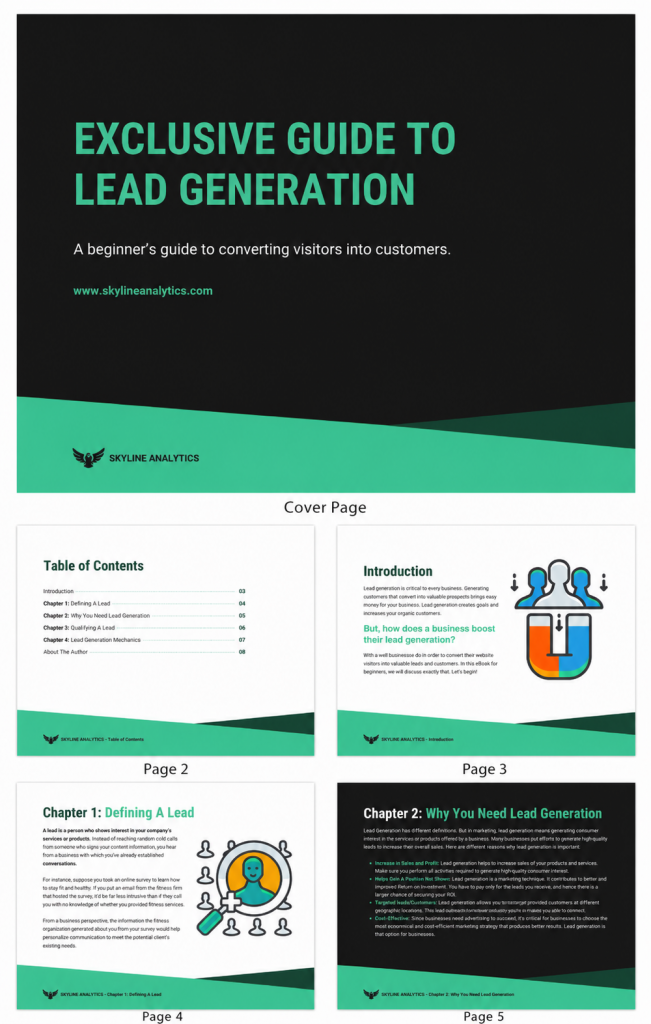
- Lead magnet ebooks work best when they solve one specific problem fast. The most effective ones are under 20 pages, have a single clear audience, and suggest actionable tasks before the reader reaches the end.
- Visually, they tend to use brand colors and clean layouts with strong CTAs placed mid-document and at the end, not just in the final page.
Key takeaway: Shorter is better. A 10-page ebook the reader finishes converts better than a 40-page ebook they download and never open.
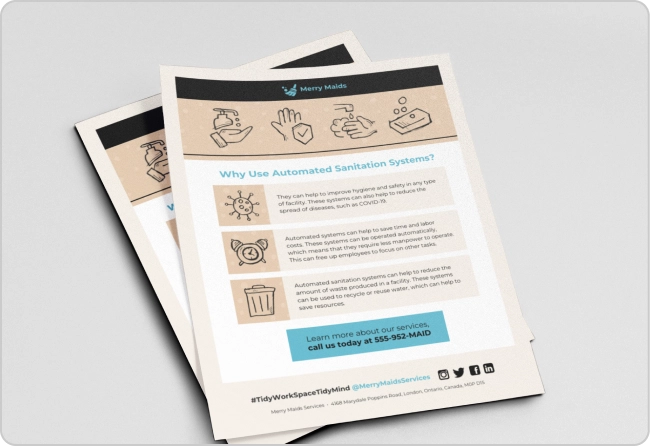
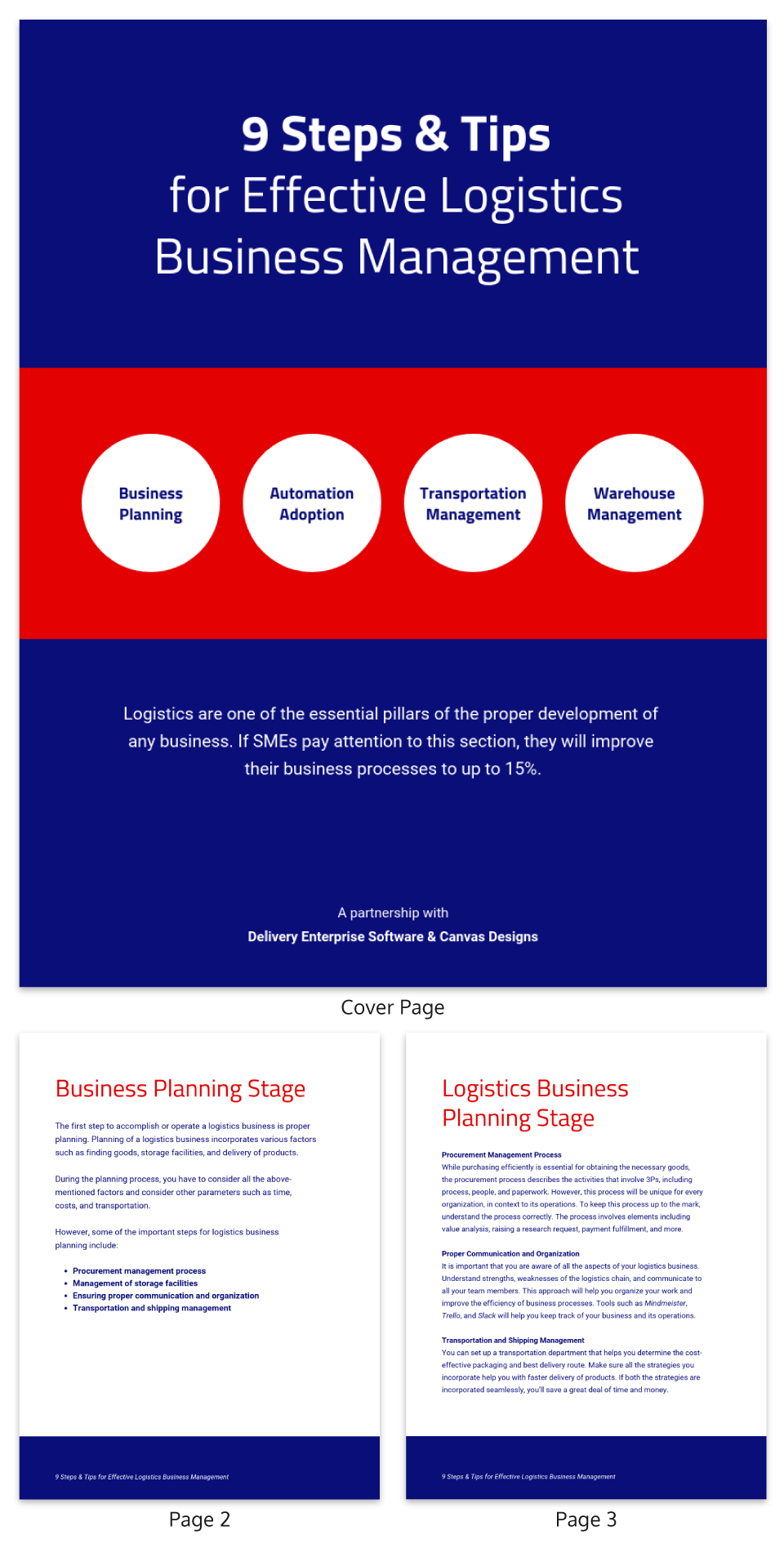
If you’re looking to create a lead generation ebook that’s both insightful and practical, these templates are a great place to start:


2. Business and marketing ebook examples
Type: PDF or designed guide
Best for: Marketing teams, agencies, B2B content programs, thought leadership campaigns
Why it works:
- Business and marketing ebooks work best when they lead with data, frameworks, or hands-on expertise. Business readers will quickly lose interest in generic advice.
- Use clear chapter breaks, data callouts, and case study excerpts to keep the content credible and skimmable.
- Visual structure, such as headers, subheaders, pull quotes, and summary boxes, helps to break up dense sections and give readers natural stopping points.
Key takeaway: If your ebook makes a claim, back it up with a source, a statistic, or an example.
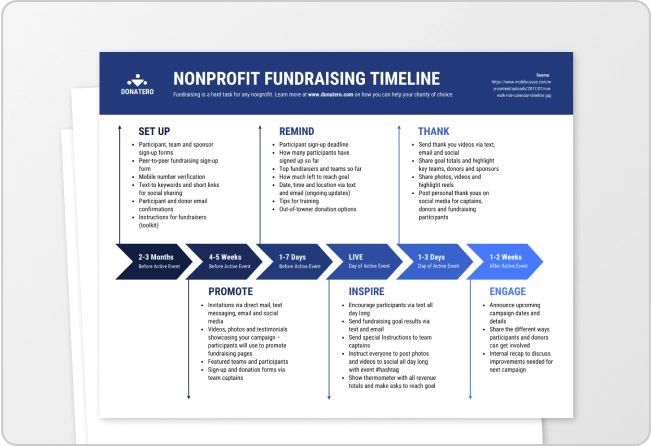
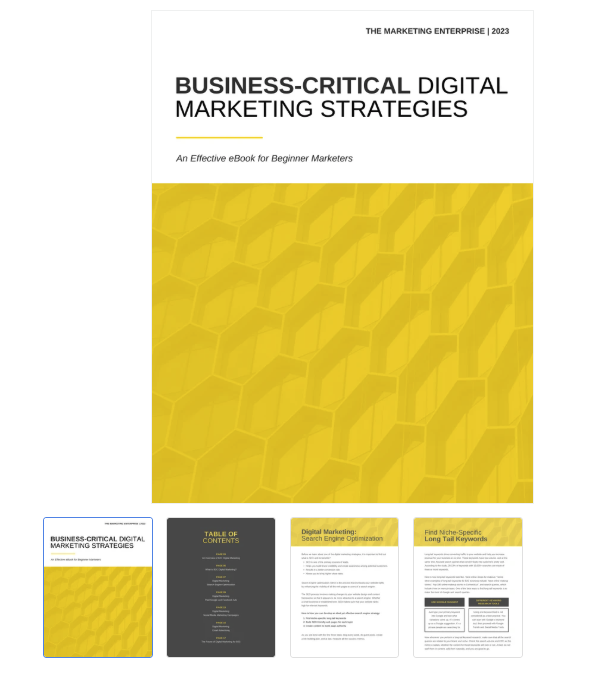
If you’re looking to design a business manual that’s clear, professional, and user-friendly, here are some ebook templates you can start customizing right away:


3. Educational ebook examples
Type: PDF, EPUB, or structured guide
Best for: Course creators, training departments, nonprofits, educational publishers, coaches
Why it works:
- Educational ebooks succeed when they’re structured around what the reader needs to do, not just what they need to know.
- The best examples use a mix of explanatory text, diagrams, checklists and opportunities for reflection to reinforce learning.
- Accessible design is especially important here – readable font sizes, sufficient contrast ratios and alt text for images align with WCAG accessibility guidelines and widen the audience.
Key takeaway: Design around the learning outcome, not the page count. If a section isn’t helping the reader do or understand something new, remove it.
This example below focuses on growing audiences on YouTube and social media platforms:


4. Creative ebook examples
Type: EPUB, visual PDF, or interactive format
Best for: Authors, designers, artists, storytellers, brand campaigns with editorial ambitions
Why it works:
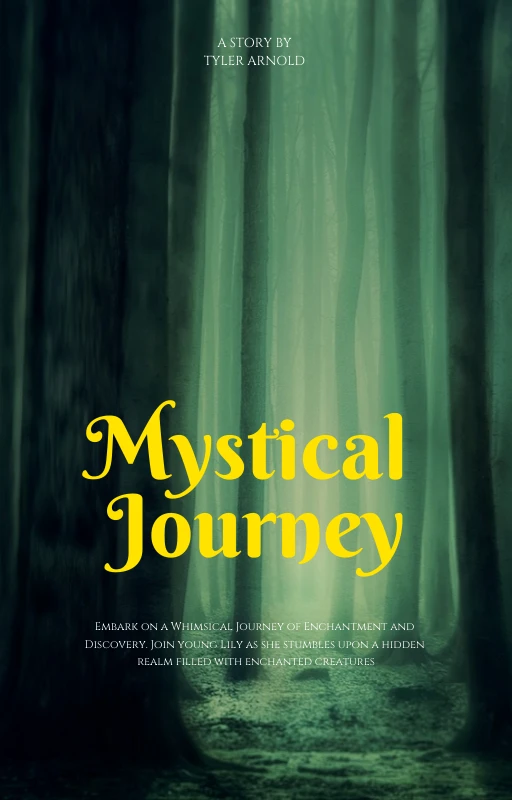
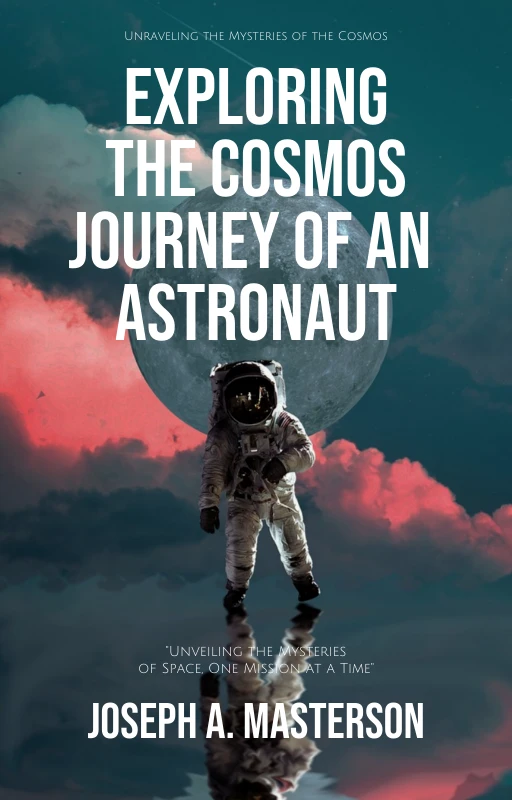
- Creative ebooks give designers the most freedom, but without structure it can produce work that’s impressive to look at but hard to follow. Strong examples use the visual elements to support the narrative, not replace it.
- Typography choices carry a lot of weight in creative formats. Serif fonts are suited for long-form narrative, display fonts for covers and chapter headers, and generous line spacing for readability.
- EPUB format is often a better choice for creative ebooks than PDF because it can adapt to different screen sizes and layouts.
Key takeaway: Design is a layer on top of the content. The strongest creative ebooks would hold together even without the visuals.


5. Lifestyle ebook examples
Type: PDF or EPUB
Best for: Travel brands, wellness coaches, food bloggers, lifestyle creators
Why it works:
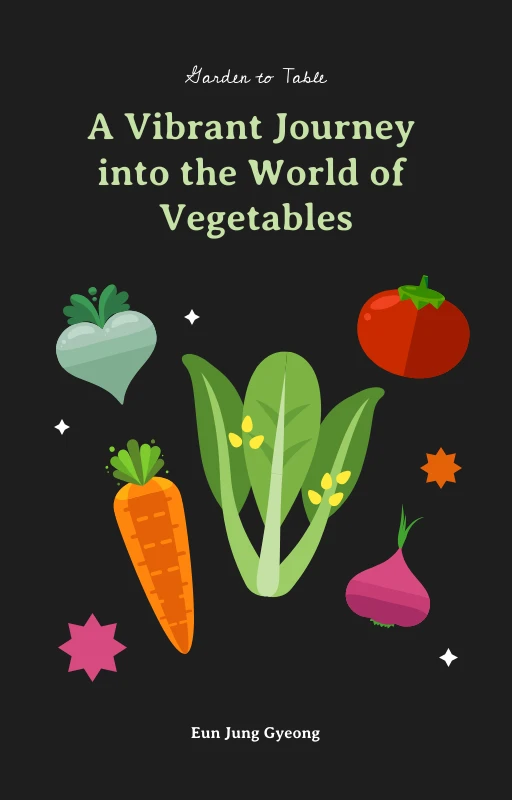
- Lifestyle ebooks create aspiration and deliver practical value. Readers want to be inspired and equipped.
- High-quality photography or illustration, clean whitespace, and a conversational tone are the visual signals that tell a lifestyle reader they’re in the right place.
- These ebooks tend to perform well as email opt-in incentives, especially in travel, food, and wellness niches, because they offer something desirable, not just useful.
Key takeaway: Lead with the aspiration, then deliver the practicality. The cover and title should sell the feeling, while the content should deliver the how.


6. PDF and minimalist ebook examples
Type: PDF (fixed layout)
Best for: Anyone who needs reliable visual formatting across all devices, from reports to how-to guides
Why it works:
- PDF works best when the layout matters as much as the content. Charts, comparison tables, and step-by-step visual guides hold their format in PDF in a way that EPUB does not.
- Minimalist ebooks in this format often outperform heavily designed ones because they’re faster to scan, easier to print, and look professional without much effort.
Key takeaway: If you’re not sure which format to use, start with PDF. It has the most predictable rendering across devices and the lowest design complexity.
If you’re designing an ebook, these ebook templates can help you create something simple, elegant and reader-friendly:


7. Interactive and visual-first ebook examples
Type: Interactive PDF, flipbook, HTML ebook, or visual-first layout
Best for: Brands wanting higher engagement, product demos, course previews, or content experiences
Why it works:
- Clickable navigation, embedded video, and animated data visualizations all add value when they help readers explore or understand something faster.
- However, don’t add an interactive feature for the sake of it. The examples that work best use interactivity at key moments, such as chapter navigation, an interactive quiz, or a comparison tool, not as decoration.
- These formats are typically delivered online rather than as downloads, which also makes them easier to update and track.
Key takeaway: Interactive ebooks have a higher production cost. Justify the format with a use case that benefits from interactivity, like a product catalog or an assessment guide.


Not the ebook cover you’re looking for? Browse our collection of ebook cover templates to find one that fits!
Real published ebook examples
The following examples are published ebook success stories, not design templates. Each one illustrates a different lesson about content, packaging, distribution, or audience fit that ebook creators can apply to their own work.
1. The Martian by Andy Weir

Type: Self-published fiction, later traditionally published
What made it successful: Andy Weir originally published The Martian chapter by chapter on his personal blog before releasing it as a free ebook download. When fans requested an Amazon Kindle version, he priced it at $0.99 and it quickly rose to the top of Amazon’s best-seller lists in science fiction. A traditional publisher then acquired it, followed by the film adaptation.
What creators can learn: Sharing early, unfinished work builds an audience and tests demand before you invest in a final product. Giving content away for free provides growth opportunities.
Lesson category: Distribution and audience fit
2. Fifty Shades of Grey by E.L. James

Type: Self-published fiction, later traditionally published
What made it successful: Originally published as fan fiction, then self-published as an ebook through The Writers’ Coffee Shop, the book built a reader base through word-of-mouth in online communities before receiving mainstream attention. Vintage Books acquired and republished it, and it became one of the fastest-selling paperbacks of all time.
What creators can learn: Niche communities can help to generate more initial momentum than broad distribution. Publishing where your audience already gathers, even in a small format, is often more effective than launching into a general marketplace.
Lesson category: Audience fit and community-led distribution
3. Wool by Hugh Howey

Type: Self-published science fiction, serialized
What made it successful: In 2011, Hugh Howey published Wool as a short story on Amazon’s Kindle Direct Publishing platform. Reader response was strong enough that he expanded it into a series. He retained his ebook rights when signing a print deal with Simon and Schuster, a decision that became a notable case study in self-publishing strategy.
What creators can learn: Format and rights decisions matter as much as the content itself. Howey’s choice to retain digital rights while licensing print allowed him to continue earning ebook revenue independently.
Lesson category: Packaging and rights strategy
4. The Easy Way to Stop Smoking by Allen Carr

Type: Nonfiction self-help, published in print and digital
What made it successful: First published in 1985 and later released in ebook format, this title has sold over 13 million copies across editions. Its success is largely attributed to a highly specific audience promise: it addresses one problem, for one audience, with a single repeated method. The ebook version allows for more accessibility to an already-proven concept.
What creators can learn: A nonfiction ebook that solves one clearly defined problem for one clearly defined reader will outperform a broader guide.
Lesson category: Content and audience focus
5. The 4-Hour Workweek by Timothy Ferriss

Type: Nonfiction business/lifestyle, traditionally published
What made it successful: This book adopted a thorough digital marketing strategy, including a blog, podcasts, and direct reach-outs to readers well before publication. Ferriss tested his title and positioning using Google AdWords to identify which framing resonated most with potential readers before the book launched.
What creators can learn: Titles and positioning can be tested before you publish. If you’re uncertain about your ebook’s framing, running small paid tests on headline variants is a low-cost way to validate your angle before committing to it.
Lesson category: Packaging and pre-launch positioning
Inspired to create your own ebooks? Kickstart your ebook publishing journey with Venngage’s ebook maker with ease today!
Creating an ebook demands thoughtful consideration of various elements to ensure an enriching reading experience. Here are the ten traits that consistently separate effective ebooks from forgettable ones:
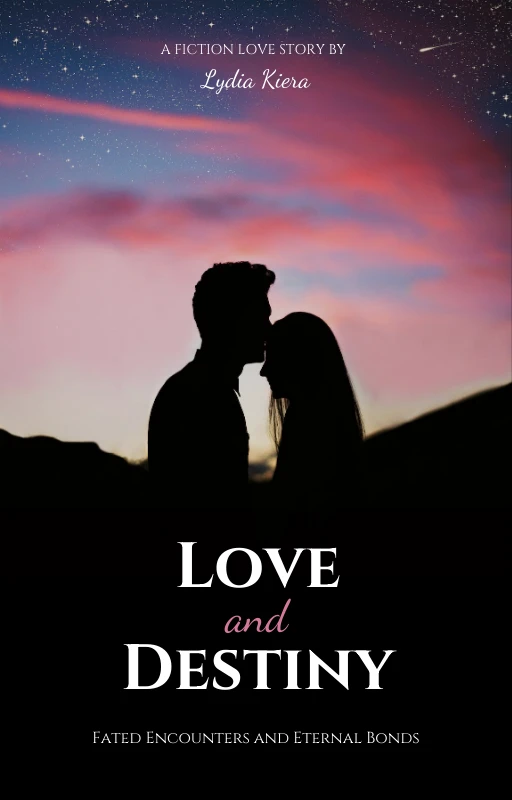
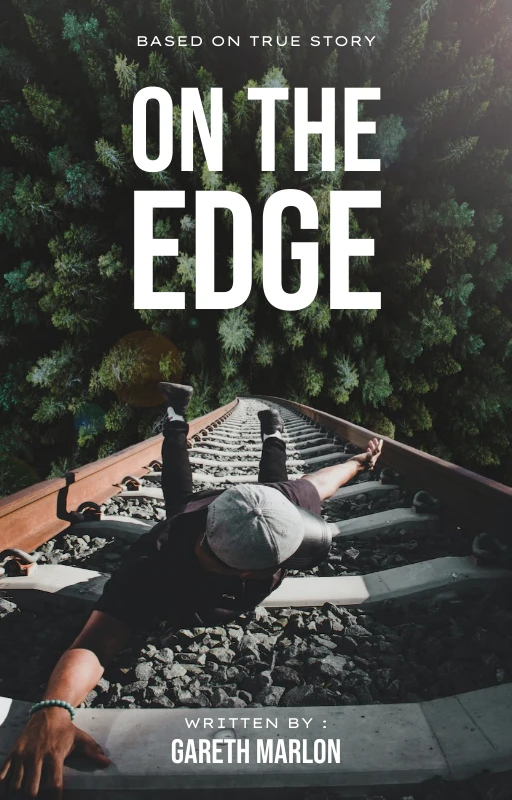
Strong cover and title
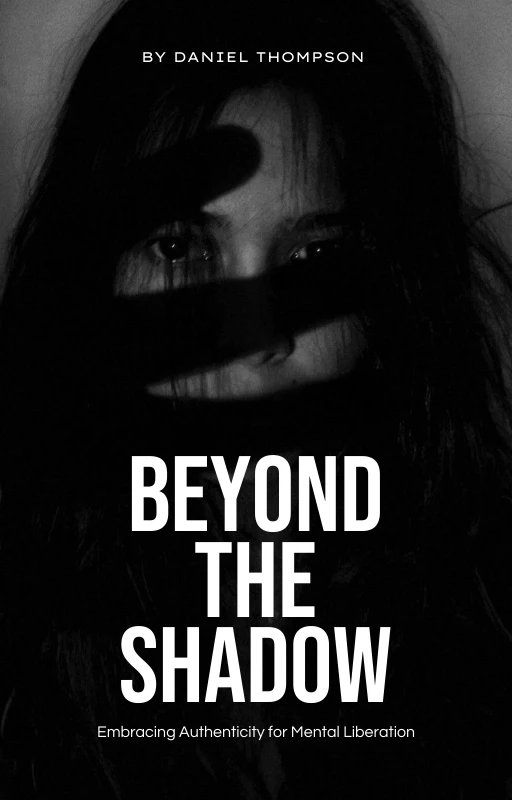
The cover is the first conversion point. A well-designed cover with a specific, descriptive title tells readers exactly who the ebook is for and what they’ll get. Covers that work at thumbnail size, not just at full resolution, also perform better in digital distribution channels.
Clear audience focus
The strongest ebooks are written for one reader, not everyone. This doesn’t mean a narrow total audience. It means every sentence is addressed to a specific type of person with a specific goal. When readers feel directly addressed, they engage more and share more.
Clean, readable typograph
Opt for fonts that are easy on the eyes, maintain consistent font sizes and ensure appropriate line spacing. Decorative fonts may work for covers and headers, but long-form body text requires a serif or sans-serif font with a comfortable reading size.
Proper formatting techniques, such as indentation and alignment, also contribute to a professional presentation, elevating the overall reading experience.
Short, scannable sections
Most readers don’t read ebooks cover to cover. They scan for the sections most relevant to them. Short paragraphs, frequent subheadings and summary callouts allow readers to navigate to what they need and extract value quickly, even if they don’t read every word.
Useful visuals, not decorative filler
Images, charts, and diagrams should help the reader understand something faster or more clearly than just text alone. Decorative visuals that don’t add informational value increase file size and slow comprehension. The best visual-heavy ebooks use each image with purpose.

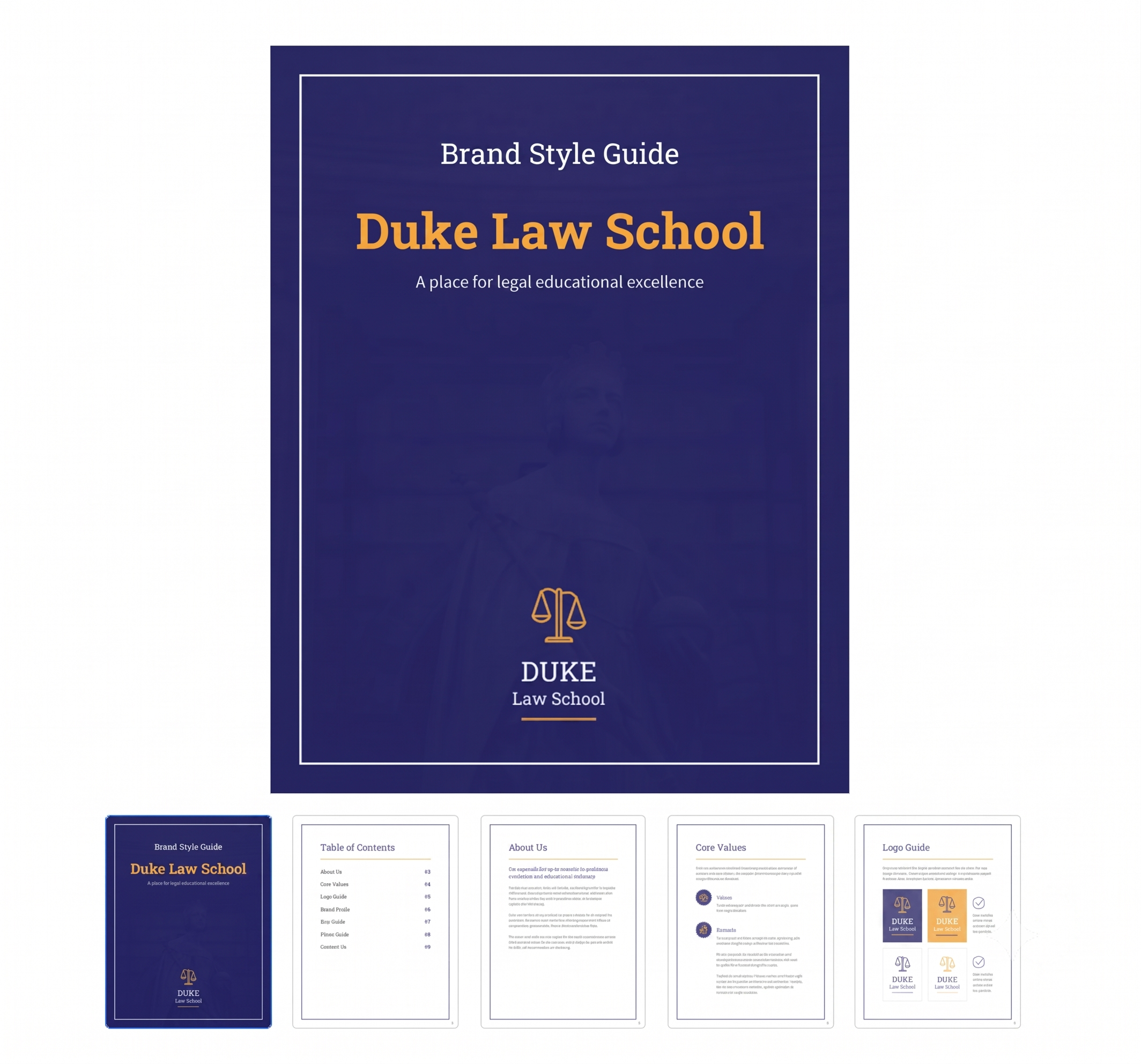
Consistent visual system
Color palette, font choices, icon style, and spacing should be consistent throughout. Inconsistency signals that an ebook was assembled, not designed. Even a two-color, one-font system applied consistently throughout produces a more refined result than a visually varied approach.
Readers should always know where they are in the document and how to find what they’re looking for. A clickable table of contents, clear chapter markers and consistent heading levels make ebooks significantly easier to use. For EPUB format, proper heading tags are also important for accessibility.
Mobile-friendly and accessible design
Readers access ebooks across a spectrum of devices so ensure your ebook is responsive, and adapting to different screen sizes and orientations. A well-executed design helps readers enjoy your content in different formats, whether on a smartphone, tablet or computer.
Accessibility is just as important. Following WCAG (Web Content Accessibility Guidelines) helps make your ebook usable for all readers. Use alt text for images, resizable text and sufficient color contrast to support those with visual impairments.
Value-first content
The best ebooks deliver real value before asking for anything in return. Whether that’s a practical framework, a unique dataset, or an actionable checklist, the reader should feel they’ve gained something by the time they reach the midpoint. Value-first content also improves shareability.
A clear next step for the reader
Every effective ebook ends with a direction. This doesn’t have to be a hard sell. It can be a link to a related resource, an invitation to a free trial, a prompt to share, or a simple call to apply what they’ve just read. Ebooks without a clear closing action miss an easy opportunity to convert.
Incorporating these factors throughout your ebook design enhances its value, making it an enjoyable and informative experience for readers.
How to choose the right ebook style for your goal
The format you choose for an ebook should follow directly from what you’re trying to accomplish. Here is a short decision guide:
If your goal doesn’t fit into one of the mentioned categories, start with PDF. It has the most predictable rendering, the widest compatibility, and the lowest production complexity. You can always create a more format-specific version once the content is proven.
How to create an ebook like these examples
Once you have a format in mind, here is how to build an ebook that actually resembles the examples in this article rather than a first draft that never quite gets finished:
1. Start with the reader’s problem or goal: The most common ebook mistake is starting with what you want to say rather than what the reader needs. Before you write anything, answer two questions: who is this for, and what specific outcome will they have after reading it? Everything else follows from the answer.
2. Choose a format that fits the content: A workbook needs fillable fields, or at least plenty of blank space for responses. A visual case study needs PDF to preserve the layout. A long-form educational guide works better in EPUB, where the text reflows to fit any screen. Picking the wrong format means fighting the medium the whole way through production.
3. Build a simple, repeatable structure: Develop engaging content for each chapter. Address your target audience’s pain points and offer solutions that showcase your expertise.
4. Use visuals to support the content: Add visuals where they help explain or reinforce something more clearly than text alone. Charts work well for data comparisons, diagrams for processes, and photography for lifestyle and aspiration. Resist the urge to fill white space with decorative imagery, because white space is part of the design, not a gap or problem that needs to be filled up.
5. Pick the right export format: PDF is the default for most use cases and the format most readers expect. EPUB is the better choice for long-form, text-heavy content that will be read on e-readers or mobile devices. For interactive ebooks, some tools export directly to HTML or a hosted flipbook format. If you’re publishing through Amazon KDP or Apple Books, both platforms have their own format requirements and guidelines, so check those before finalizing your export.
6. End with a clear next step: Decide before you start writing what the reader should do when they finish. The closing CTA doesn’t need to be forced – a single sentence pointing to a template, a tool, a related guide, or a contact form is enough. What’s important is that the action is clear, relevant to what they just read, and easy to take in.
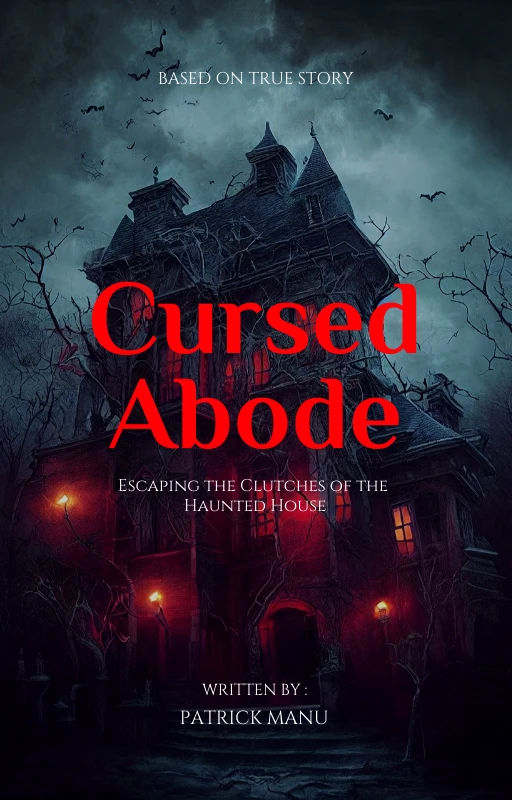
Tools worth knowing for ebook creation: Venngage (design-forward templates), Adobe InDesign (professional layout), Canva (accessible design for non-designers), Google Docs or Microsoft Word (fastest path to a formatted PDF for simple ebooks).
Use these examples as your guide to navigate this brave new world, where storytelling and design come together in ways that light up our screens and fire up our imagination.
FAQ about ebook examples
What are some popular eBook formats?
The most common are PDF (fixed layout, best for design-heavy content), EPUB (reflowable, best for mobile and e-readers), and MOBI (legacy Kindle format, mostly replaced by EPUB). Some interactive ebooks use HTML-based flipbook formats delivered as hosted links.
How do I publish my ebook?
Amazon KDP is the most widely used self-publishing platform, with support for EPUB and MOBI. Apple Books, Kobo, and Smashwords offer wider distribution. For lead magnets, most teams host a PDF behind a form on their website.
Should I offer my ebook for free?
Free works well as a lead magnet when the trade is an email address. Adding a fee makes more sense for comprehensive or highly specialized content. Many creators start free to build an audience, then introduce a paid expanded edition.
What are the best tools for designing an ebook?
There are several tools available, depending on your needs:
- Venngage – Ideal for beginners and professionals looking for customizable ebook templates, interactive elements and a drag-and-drop editor.
- Adobe InDesign – A professional tool for creating highly customized layouts with advanced design features.
- Microsoft Word or Google Docs – Great for simple text-based ebooks, with easy export to PDF.
- Scrivener – Designed for long-form content, ideal for writers working on extensive ebooks.
What types of ebooks are most popular?
Lead magnet ebooks, how-to guides, and industry reports are the most common in B2B and content marketing contexts. Educational ebooks and course companions are common in online learning. Fiction and narrative ebooks dominate consumer publishing. Lifestyle content, including travel, food, and wellness ebooks performs well as opt-in incentives and low-cost digital products.
Can I use AI to help write an ebook?
Yes. AI works well for outlines and first drafts. Edit heavily for accuracy, voice, and specificity. AI-generated content often lacks the concrete examples and original insight that make ebooks worth reading, so treat it as a starting point.
How long should an ebook be?
Lead magnets work best at 5 to 20 pages, while educational guides and business reports typically run 20 to 60. Narrative and long-form nonfiction should be as long as the content requires.
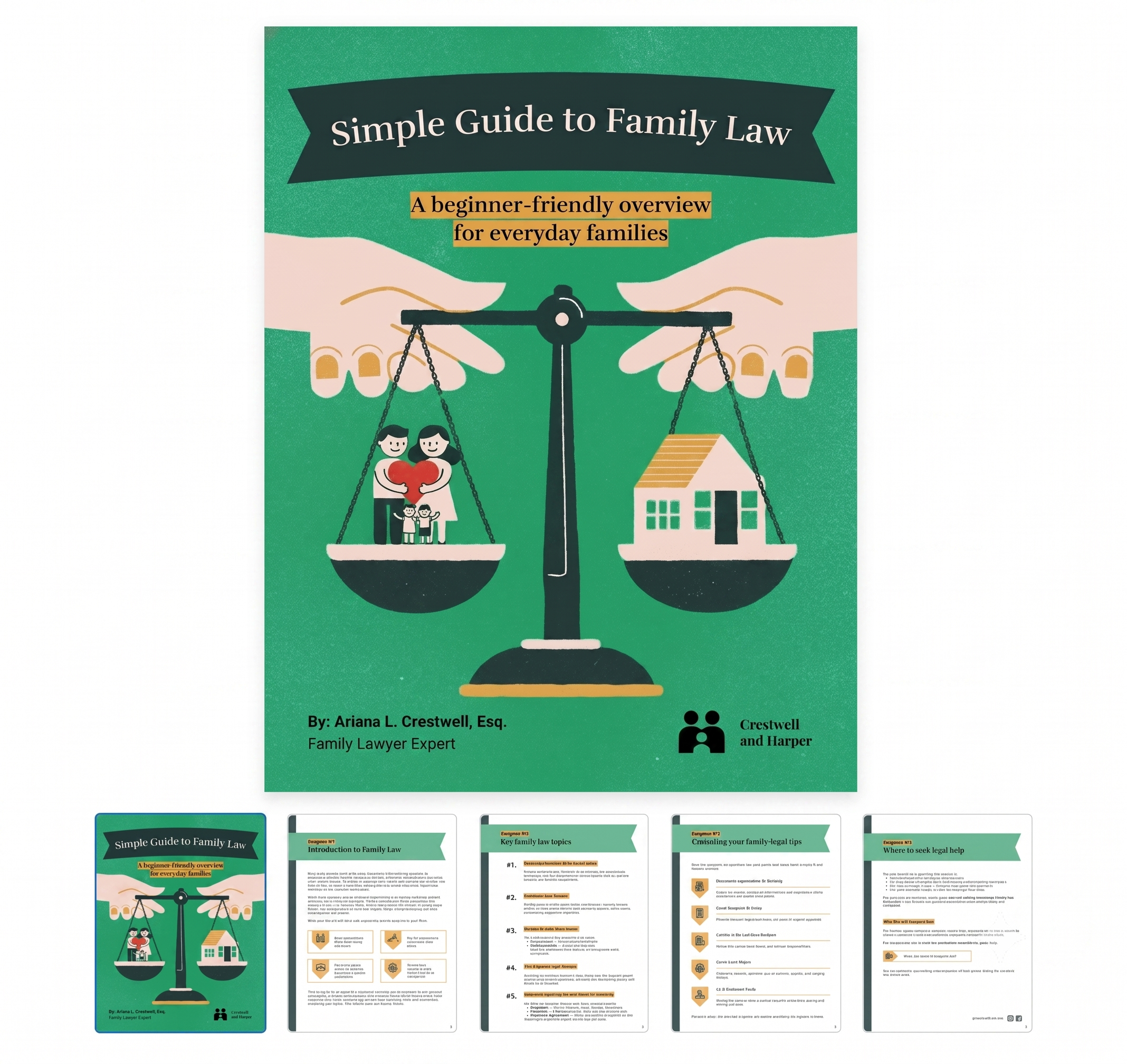
Final thoughts: Use these ebook examples as a starting point
Choosing an ebook style gets easier once you stop asking which one looks best and start asking which one fits the goal.
The examples in this article work because they each align a specific purpose with a specific audience and a format that supports both. The Martian succeeded because it was shared directly with a community that was already asking for it. A strong lead magnet works because it solves one problem for one clearly defined reader. An interactive product catalog works because the format itself becomes part of the value.
Once you know the right format and the right patterns to adopt, creating your own ebook becomes much less daunting and much more strategic. Start with the reader, choose the format, build the structure, and put the CTA in before you design the cover.
Ready to build yours? Start with a Venngage ebook template and customize it for your audience and goal.